Welcome to my Fund for Teachers fellowship journal. This space is where I share reflections, sketches, photos, and discoveries from my study of weaving, spinning, natural dyes, and textile traditions. As an art educator, I believe that making things with our hands helps us connect to history, culture, and one another. I hope these reflections not only document my learning journey but also inspire new ways to bring creativity, mindfulness, and community storytelling into the classroom.

Fellowship Notes 6/4/2026-6/5/2026
Philadelphia Museum of Art and Japanese Saori Weaving Class
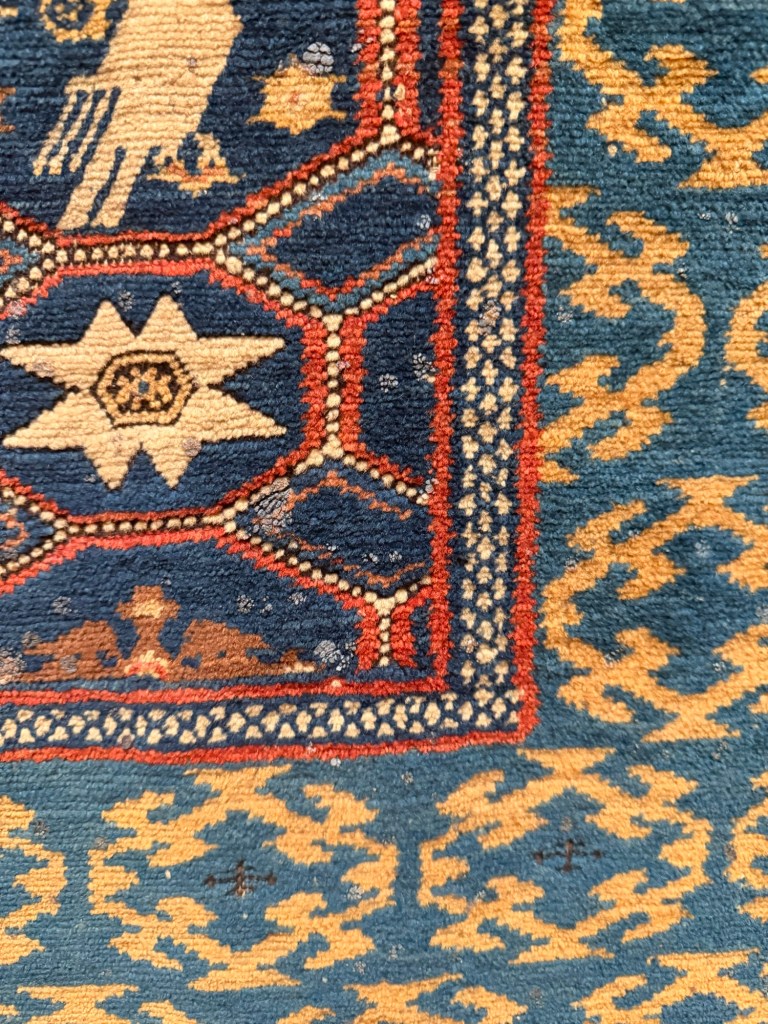
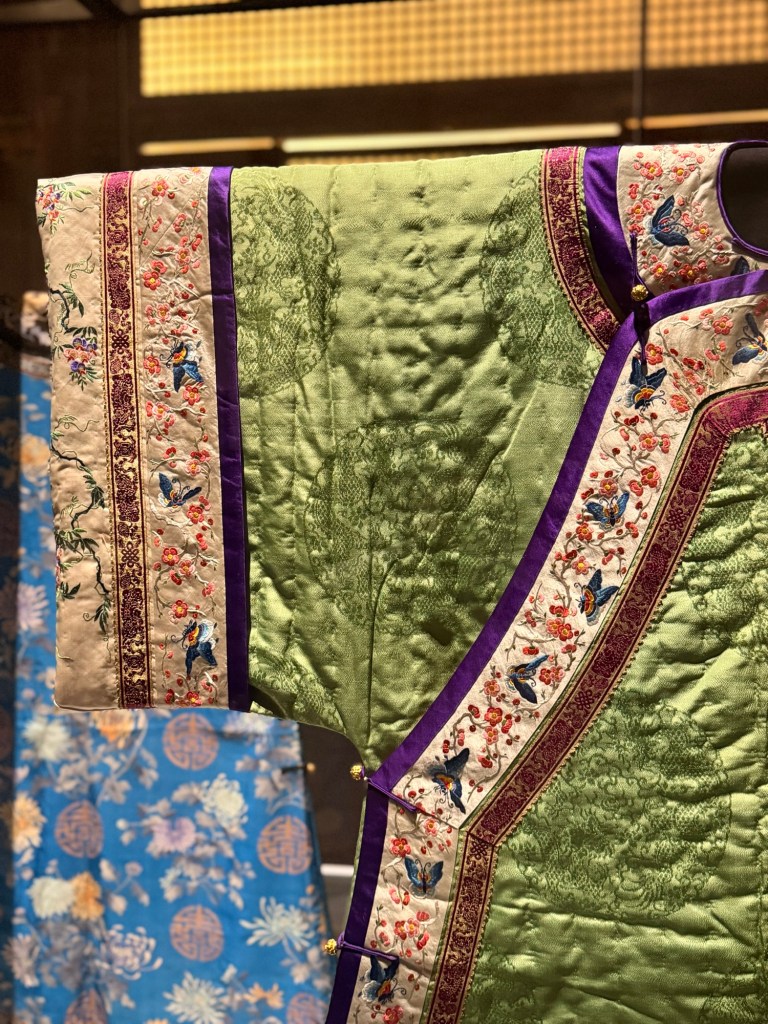
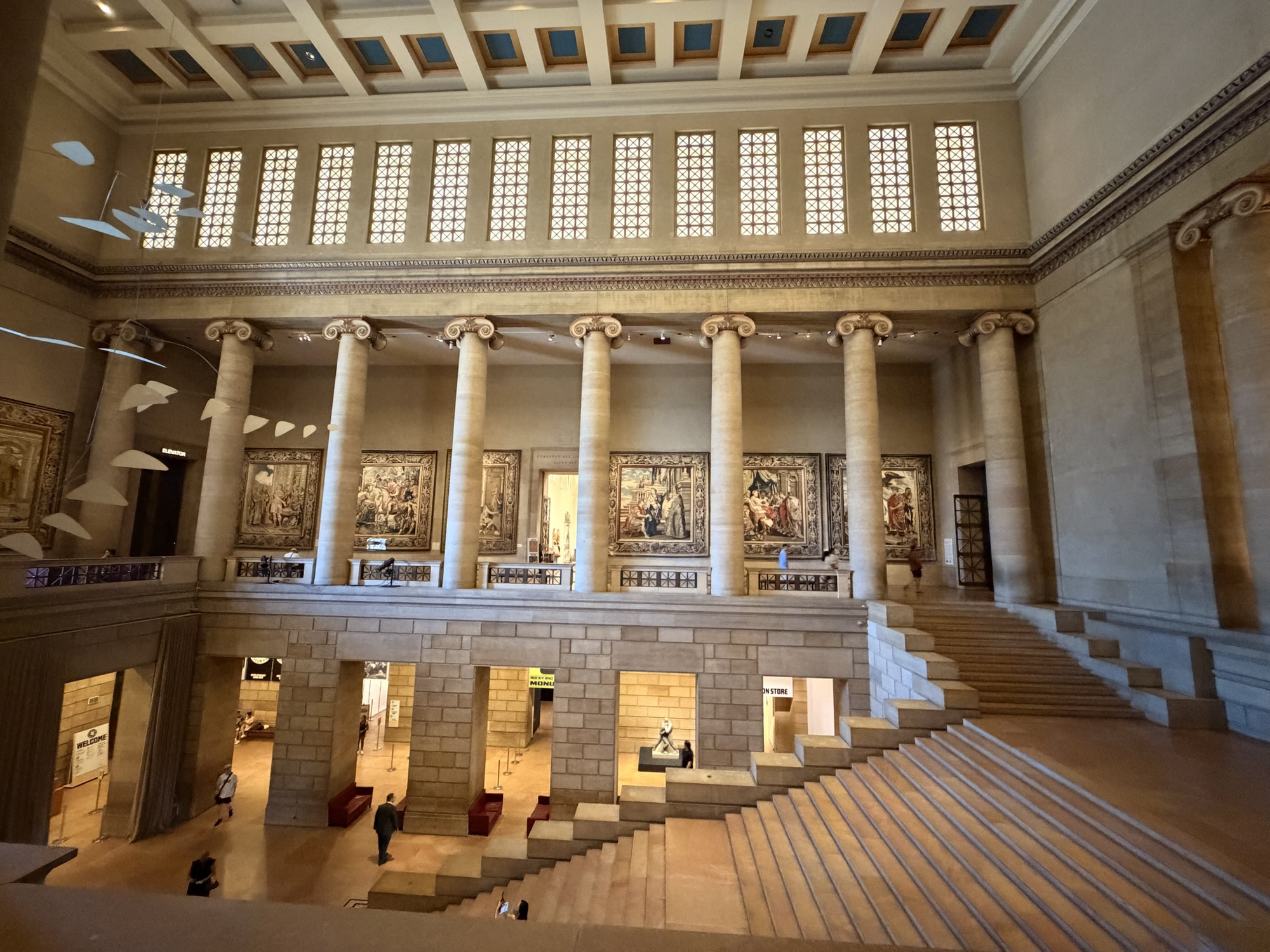
Visiting the Philadelphia Museum of Art with a focus on textiles was a new experience for me. As I moved through the galleries, I immediately began to notice both beautiful differences and striking similarities across cultures, time periods, and communities. Although the textiles came from different places and peoples, many of them shared a common purpose: preserving stories, traditions, and identity.
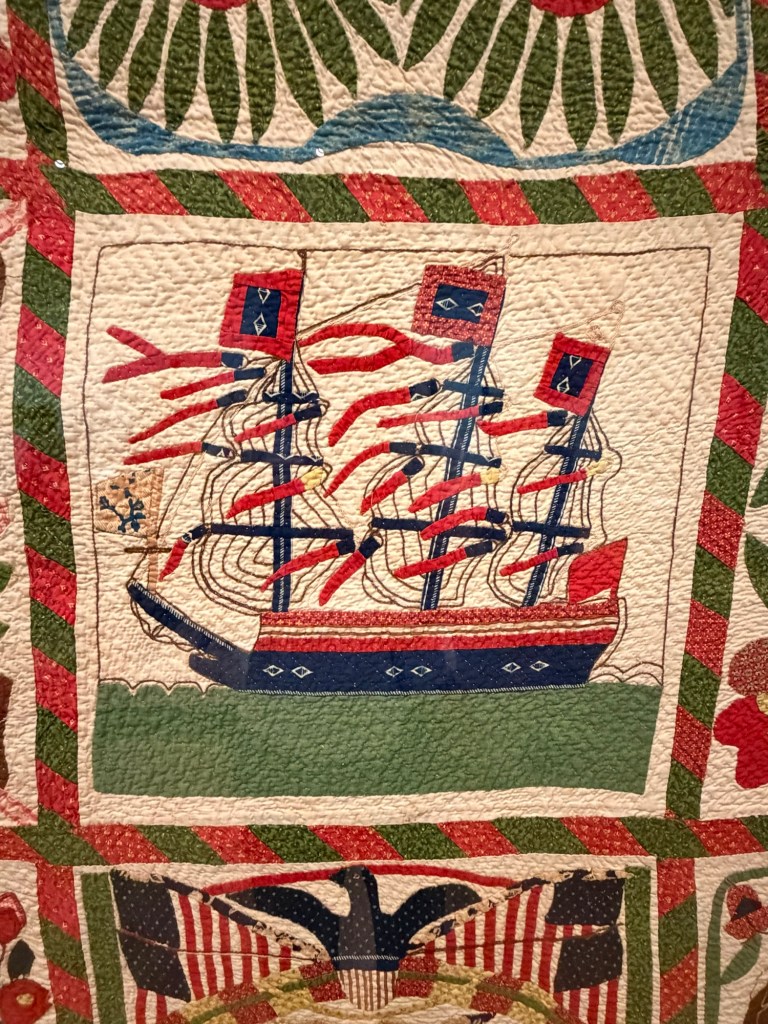
One of the first textiles I encountered was the James Buchanan Quilt, which celebrated the life of James Buchanan, the first Pennsylvania-born president, who was elected in 1856. This piece felt especially meaningful to me because I live only a few blocks from Buchanan’s former home in Lancaster, Pennsylvania. Quilting is a local tradition that I have often taken for granted, but seeing this quilt in a museum setting helped me view it through a new lens.
As I studied the appliqué work and the imagery stitched into the quilt, I became fascinated by the stories it told. The craftsmanship reflected the many skills required to create such a work, and I found myself imagining the women who contributed their time and labor to its completion. While it was the first quilt I encountered during my visit, by the end of the day I realized just how significant it was. The experience inspired me to expand my learning beyond weaving and spinning to include quilting traditions as well. I would like to bring this knowledge back to my students and help them discover ways to tell their own stories through quilting, stitching, weaving, or any artistic medium that resonates with them.
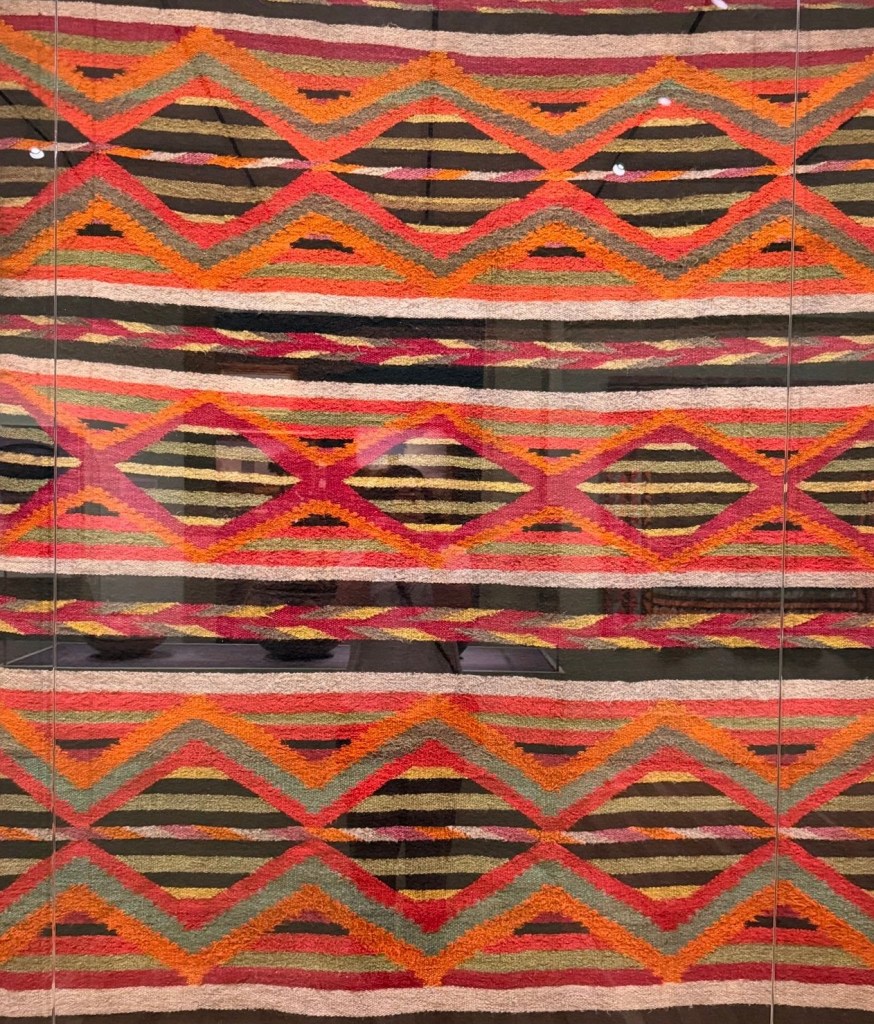
Another textile that captured my attention was a Navajo tapestry woven from naturally dyed fibers. Seeing the richness of the colors and understanding the processes used to create them reinforced my desire to explore natural dyeing as part of my fellowship experience. I learned that many Navajo textiles were sold through trading posts after the forced internment and displacement of the Navajo people during the Long Walk era. Despite immense hardship and separation from their homelands, these weavings carried forward cultural knowledge, artistic traditions, and family histories. Once again, I was struck by how textiles can preserve stories across both distance and time.
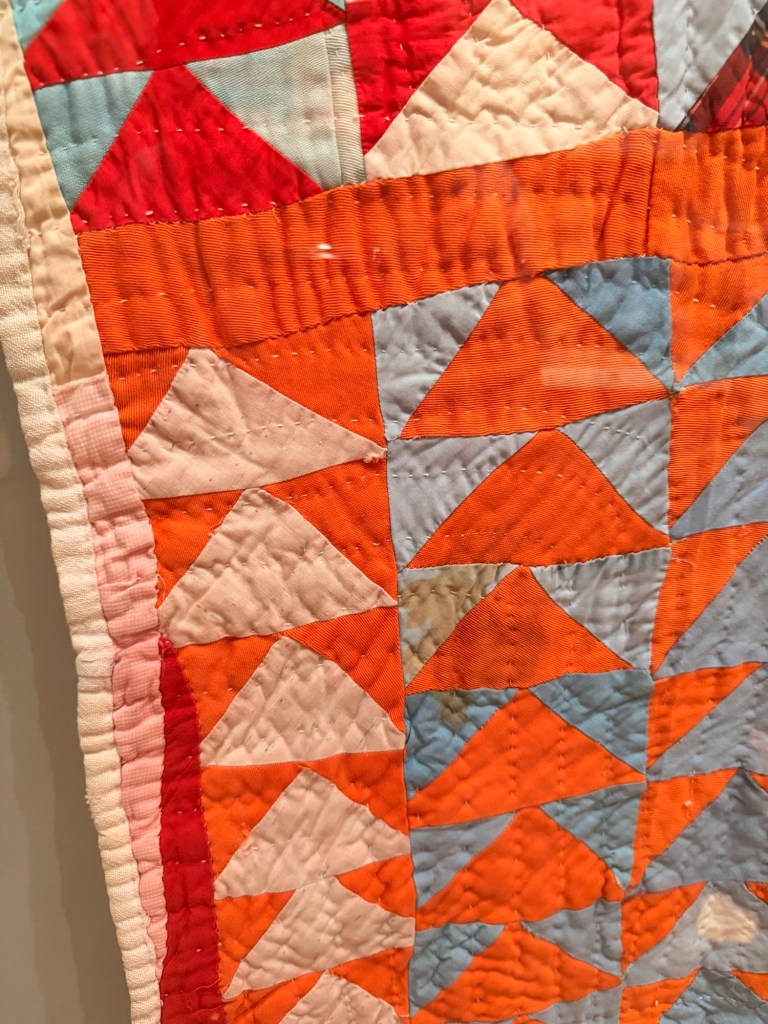
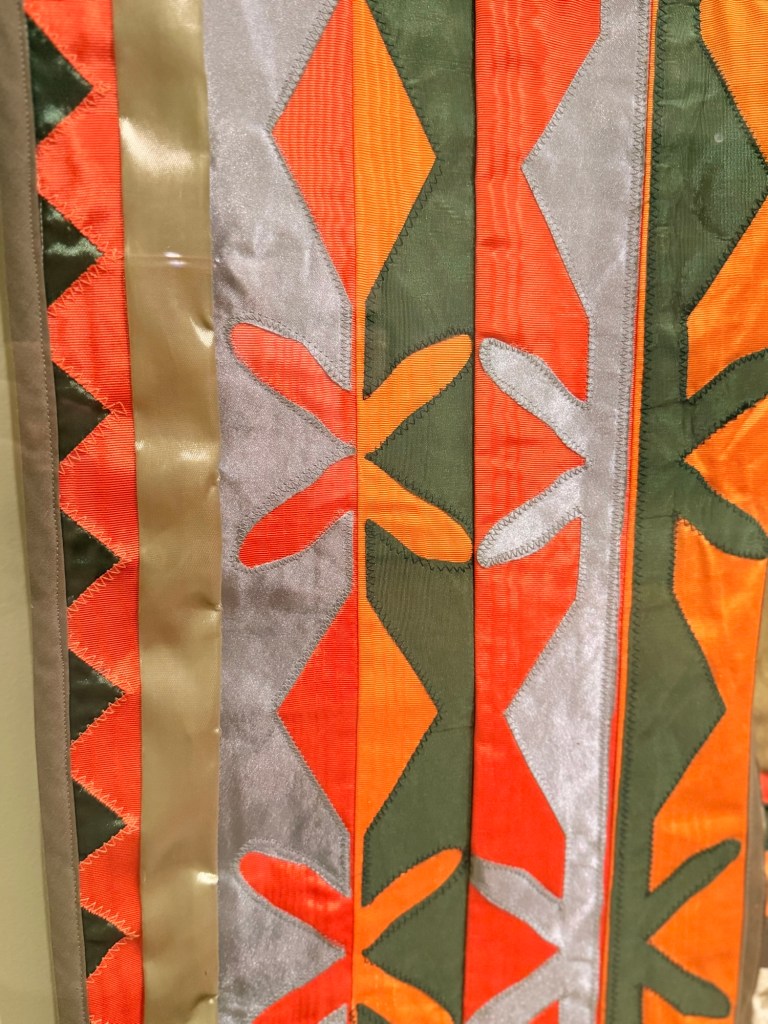
The quilt that stood out to me emotionally, was created by Annie E. Pettway of Gee’s Bend, Alabama. Unlike many quilts that emphasize precision and uniformity, this work embraced the marks of the human hand. It was made without a commercial pattern or formal instructions. Annie Pettway was part of a remarkable tradition of Black women quilters whose work has become internationally recognized for its artistry and innovation. Her granddaughter, Rita Mae Pettway, recalled her grandmother “holding the geometry in her head” as she worked.
What moved me most was learning about the collaborative nature of the quilting process. While cutting and arranging fabrics was often done individually, the final quilting frequently became a family activity, with multiple generations gathering to stitch together the quilt top, batting, and backing. The story of the quilt lives not only in the maker’s vision but also in the hands that helped bring it to life. The uneven stitches and improvised forms are not flaws; they are evidence of community, memory, and shared experience.
As I reflected on the textiles I encountered from around the world, I began thinking about how I might bring these ideas into my classroom. One lesson I would like to develop is an observational drawing and painting unit focused on textiles. I plan to provide students with hundreds of images representing a wide range of textile traditions and invite them to study the colors, patterns, textures, and designs that speak to them. Students will have opportunities to discuss what they notice, what feels familiar, and whether any of the textiles remind them of their own families, cultures, or experiences. My hope is that this experience will help students recognize that textiles are more than functional objects—they are visual records of human stories, creativity, resilience, and identity.
After spending most of the day at the museum absorbing as much information as possible, I went to my appointment with Leslie Sudock at Ready to Hand Philadelphia to learn about Saori weaving, an improvisational weaving practice that originated in Japan. The class was taught by Leslie, who first discovered SAORI while searching for adaptive weaving tools after experiencing severe carpal tunnel symptoms. Since then, she has dedicated herself to sharing SAORI weaving with a wide range of communities, including public school students, people experiencing homelessness, individuals with disabilities, and members of the general public.
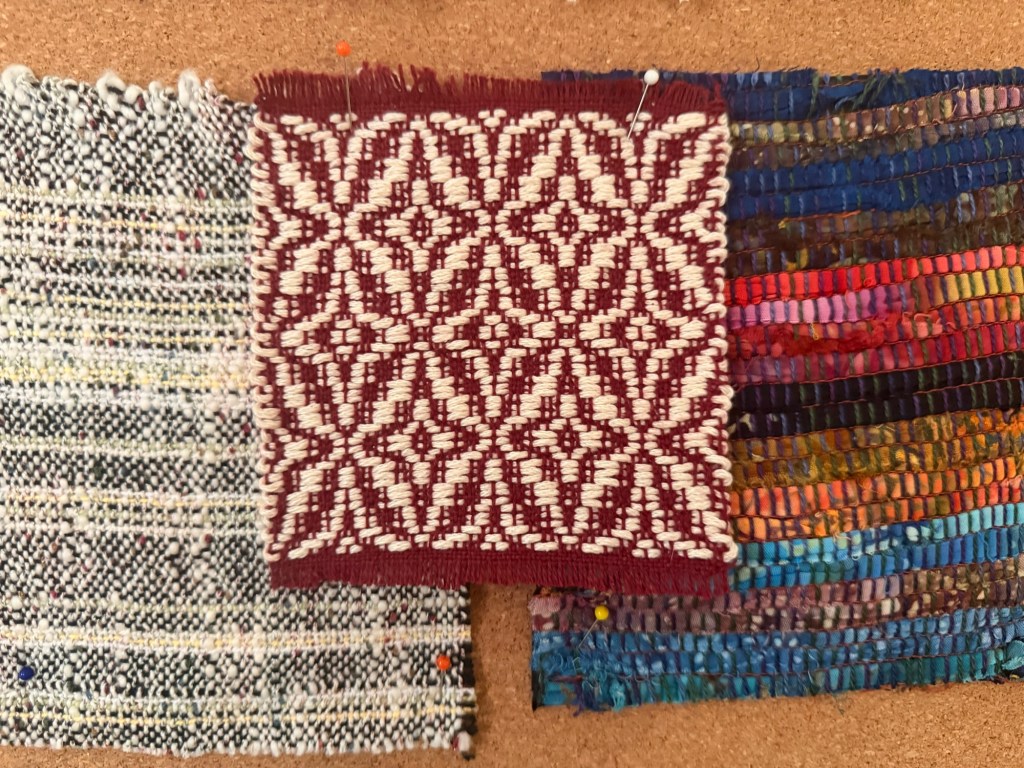
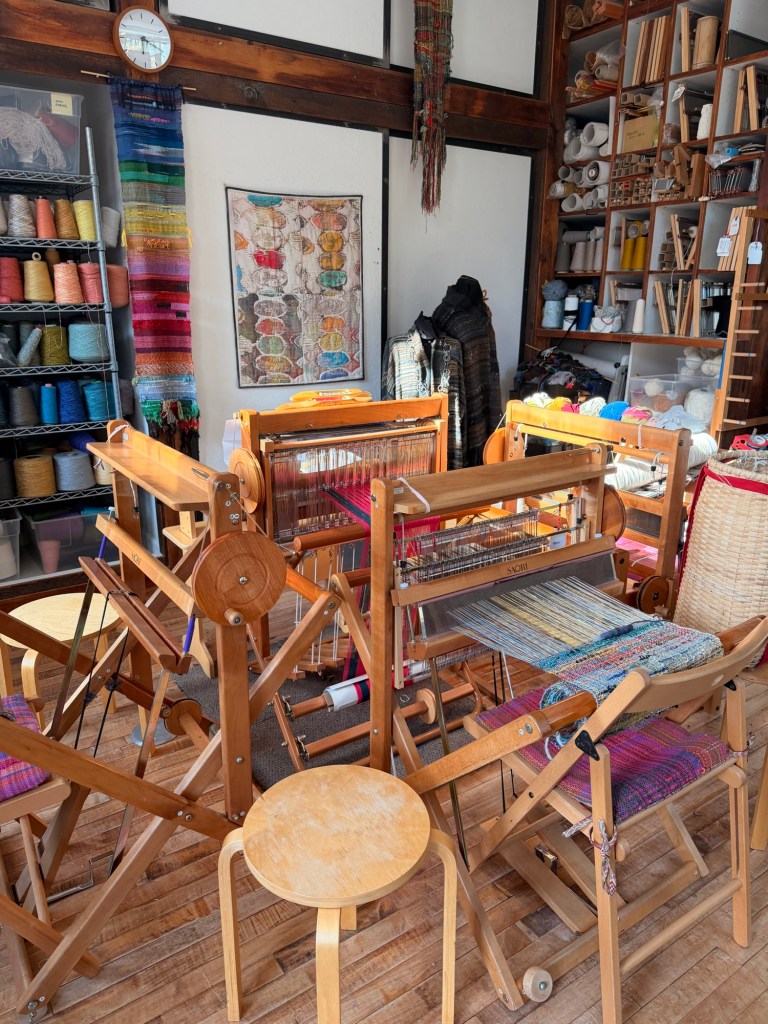
Walking into the studio was an experience in itself. Every wall and window seemed covered with colorful woven creations. Baskets of yarn, fabric strips, and fiber materials filled the space, creating an atmosphere that felt more like a creative playground than a traditional classroom. The studio reflected Leslie’s teaching style: enthusiastic, imaginative, and completely open to exploration. Conversations drifted between weaving techniques, Japanese philosophy, Zen ideas, and the concept of wabi-sabi—finding beauty in imperfection.
One of the most valuable aspects of the class was learning how SAORI weaving can be adapted for students with disabilities. Leslie shared several strategies that could be used in my own classroom. She taught a simple poem to help students remember the weaving sequence and demonstrated how color-coding parts of the loom can help students understand what step comes next. These supports can make weaving more accessible and reduce frustration for students who benefit from visual structure and repetition.
The philosophy of SAORI weaving also offered important insights. A central belief is that there are no mistakes, only discoveries. Rather than focusing on producing a perfect finished product, students are encouraged to experiment, take risks, and respond to what happens on the loom. This approach can help reduce anxiety and perfectionism while encouraging students to discover their own preferences for color, texture, pattern, and materials. I immediately saw connections to my autistic students and other learners who may benefit from a creative experience that prioritizes exploration over evaluation.
Personally, I realized that SAORI weaving is probably not the type of textile art that I would pursue extensively in my own studio practice. I tend to be drawn toward intention, planning, and craftsmanship, and I often find satisfaction in working toward a specific vision or finished product. However, this realization did not lessen the value of the experience. In fact, it helped me better understand the difference between what I enjoy as an artist and what may be beneficial for my students. For children, especially young artists, the freedom to experiment without fear of making mistakes can be incredibly powerful.
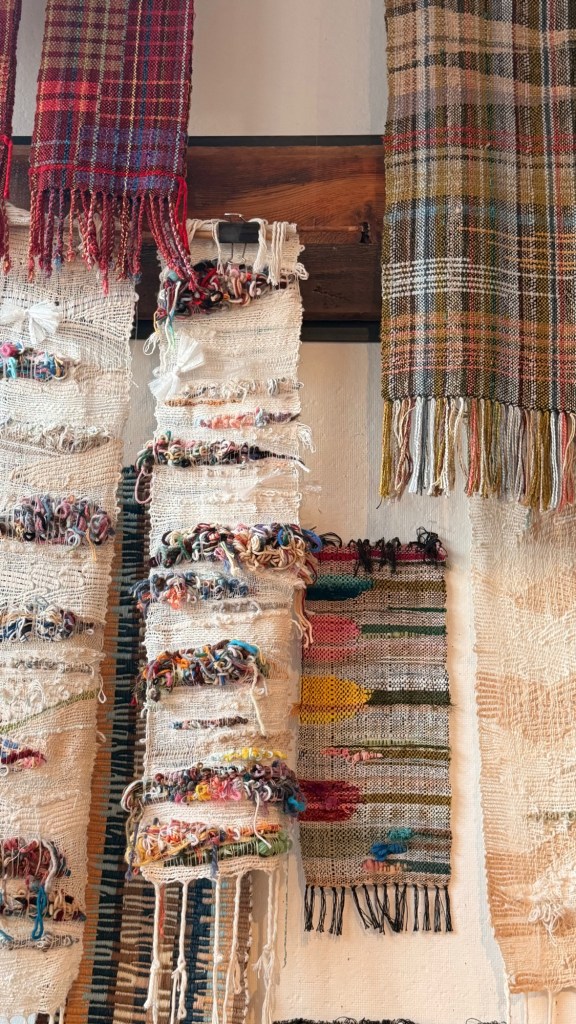
Throughout the day, I also gathered practical ideas that I can bring back to my classroom. Leslie demonstrated how cardboard can be transformed into simple shuttles, how old whiteboards can become large collaborative looms, and how weaving concepts can be introduced through playful activities. One suggestion that particularly stood out was encouraging students to weave in circular forms. This immediately reminded me of a circle-weaving flower lesson I taught this past year, where many students found success through the repetitive and rhythmic process.
I also enjoyed meeting the community that gathers around the studio. Several women attended regularly for both creative and social reasons. One participant was even sewing her handwoven fabric into a garment she planned to wear. Watching these makers share ideas, stories, and encouragement reinforced something I have seen throughout my fellowship experiences: textile arts are often about more than the objects themselves. They create opportunities for connection, conversation, and community.
While SAORI weaving may not become the focus of my own artistic practice, the experience broadened my understanding of how weaving can serve different purposes for different people. It reminded me that art can be a vehicle for self-discovery, confidence, accessibility, and belonging. Most importantly, it provided practical strategies and new perspectives that I can bring back to my students as I continue exploring how fiber arts can support creativity, well-being, and meaningful expression in the classroom.
Although the textiles I studied at the Philadelphia Museum of Art and the weaving I experienced at Ready to Hand looked very different, both experiences reinforced the idea that textiles are about more than cloth. They preserve stories, build community, and help people express identity. Whether through a nineteenth-century quilt, a Navajo weaving, or an improvisational SAORI piece, textiles serve as a record of human experience and connection.
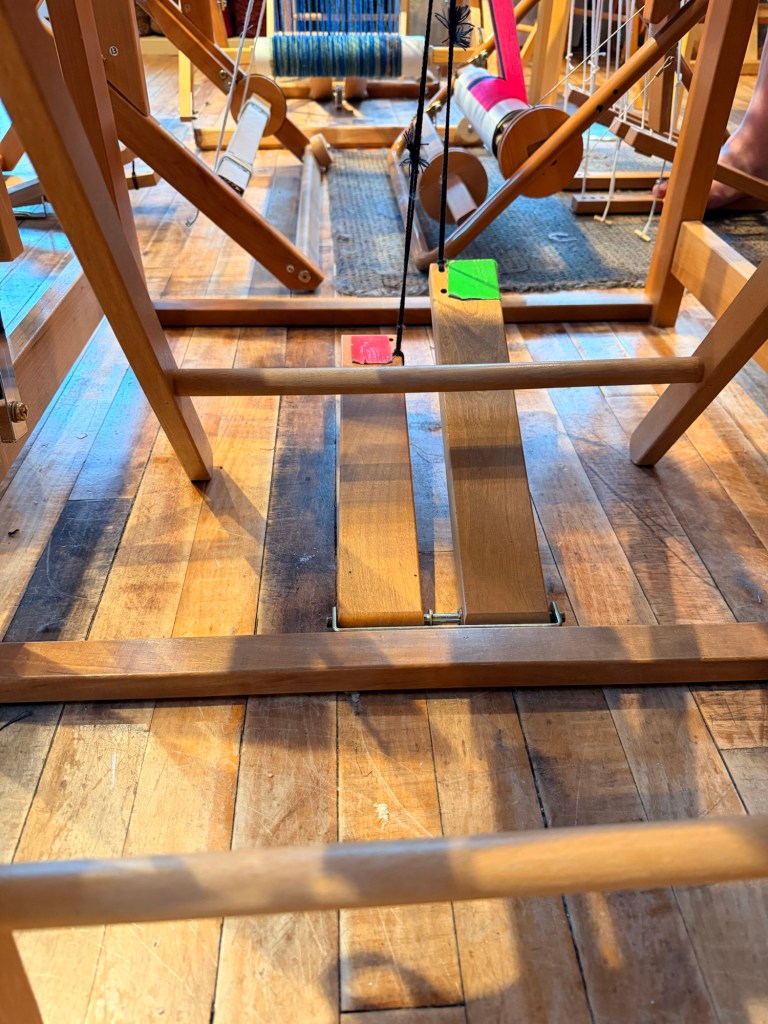
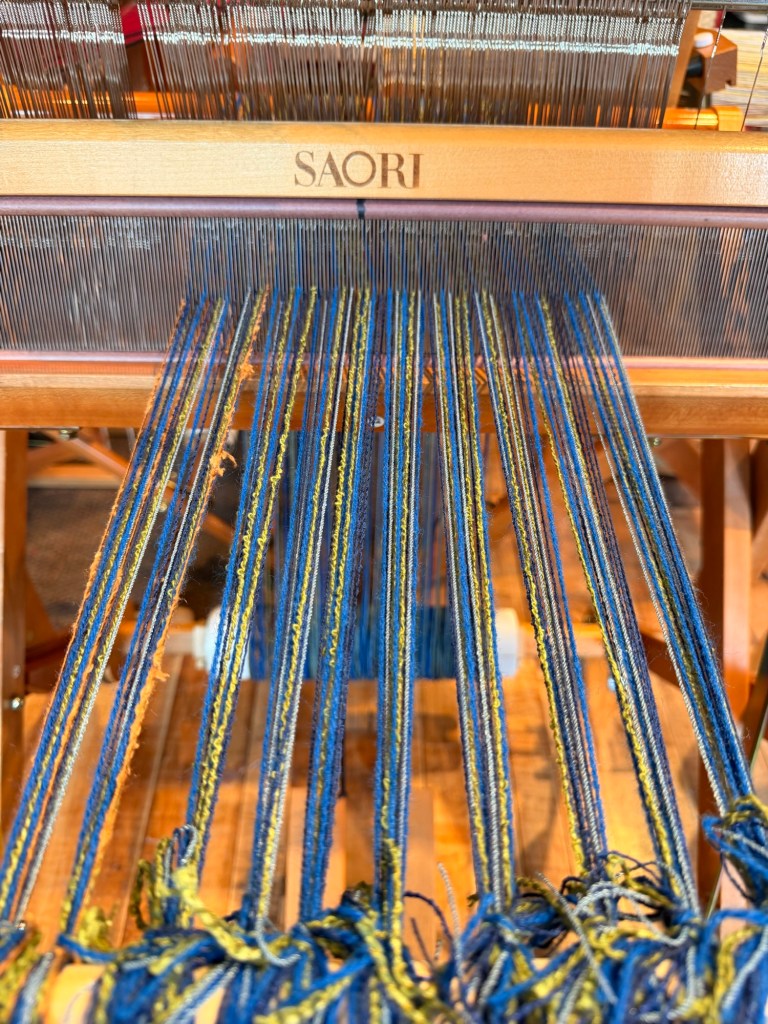
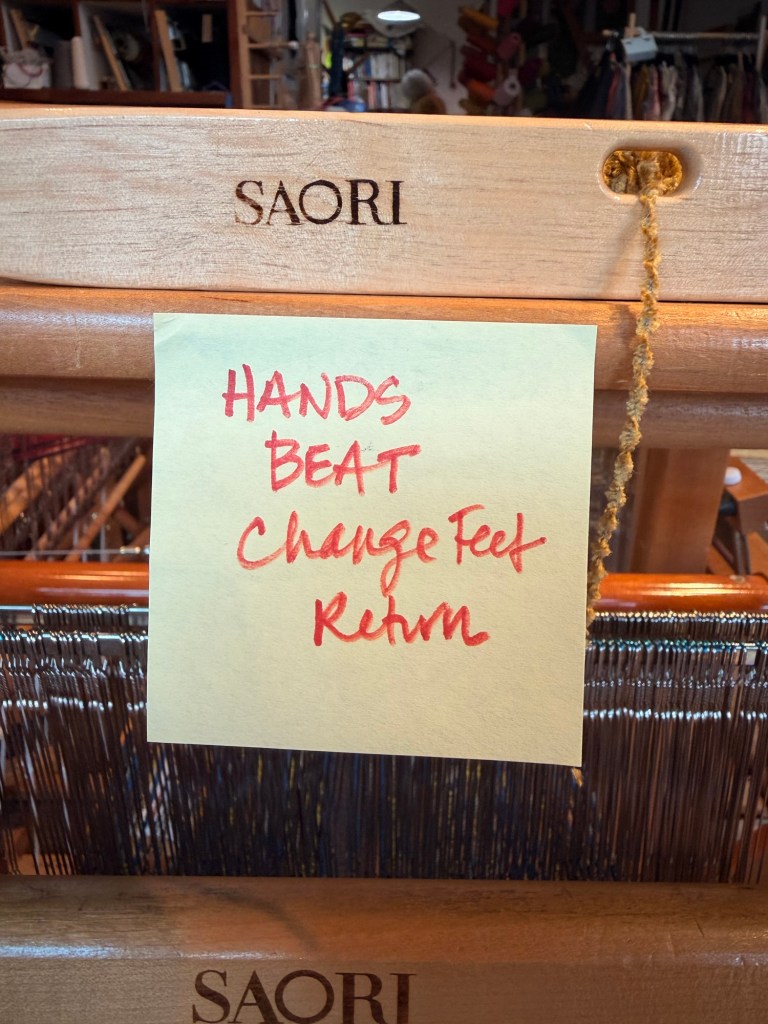
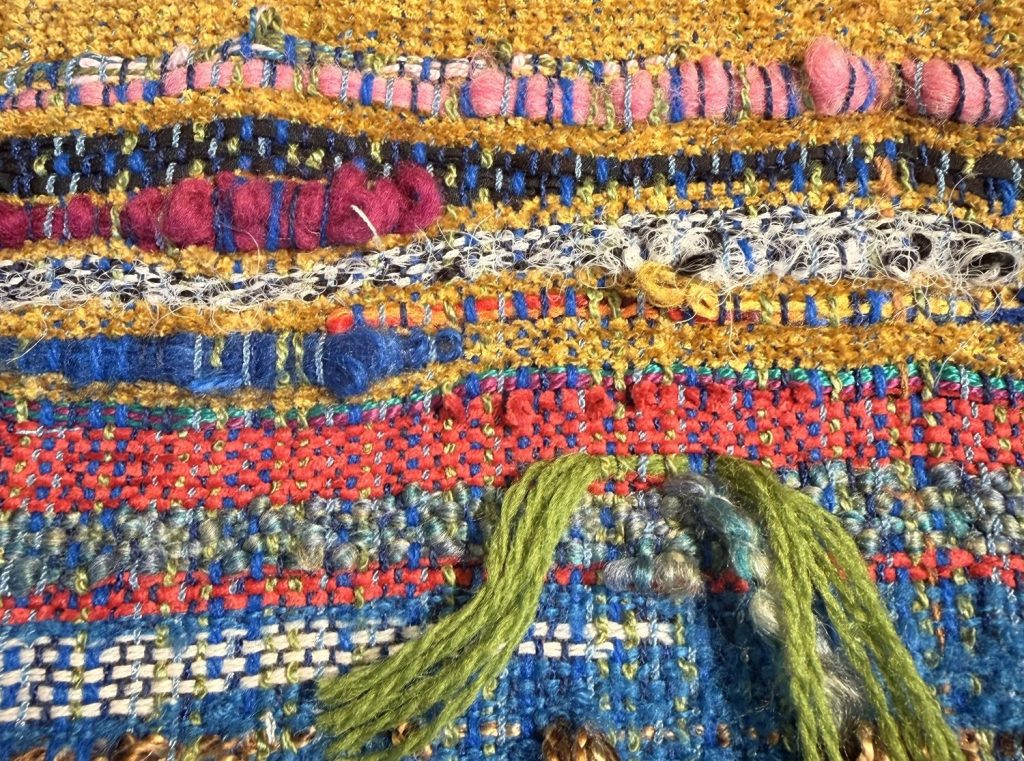
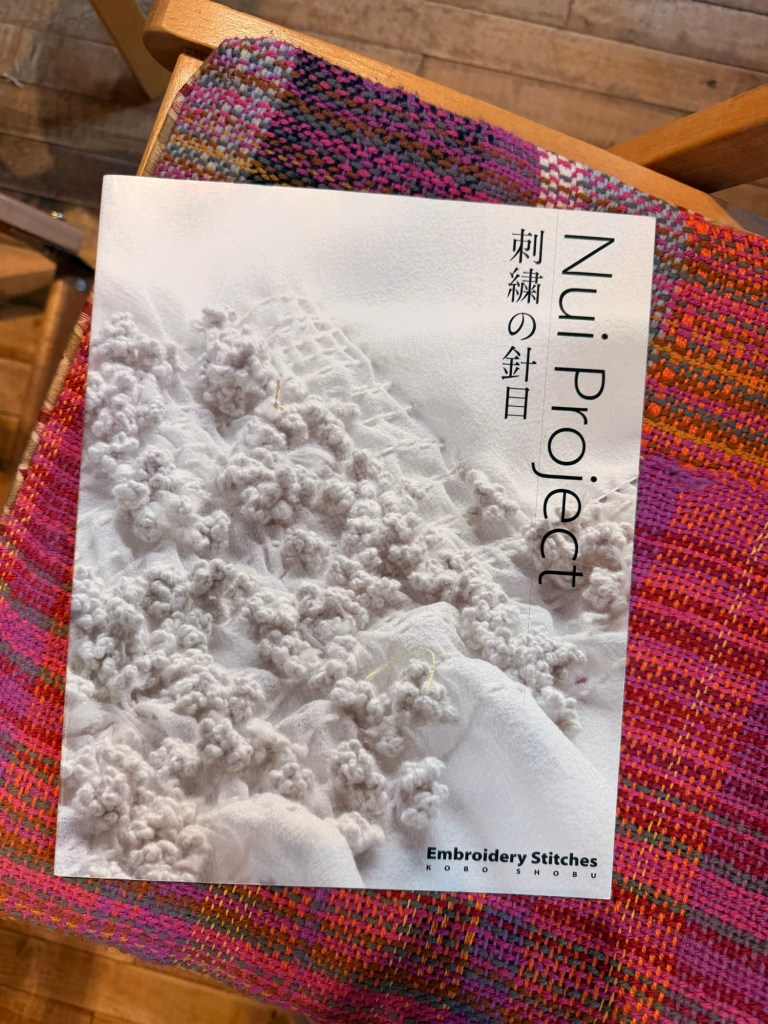
– which takes its name from the Japanese word for “stitch” – which is part of a range of art and craft workshops offered at the Shobu Gakuen in Kagoshima, Japan, a rehabilitative facility for individuals with developmental disabilities.
Fellowship Notes 6/7/2026
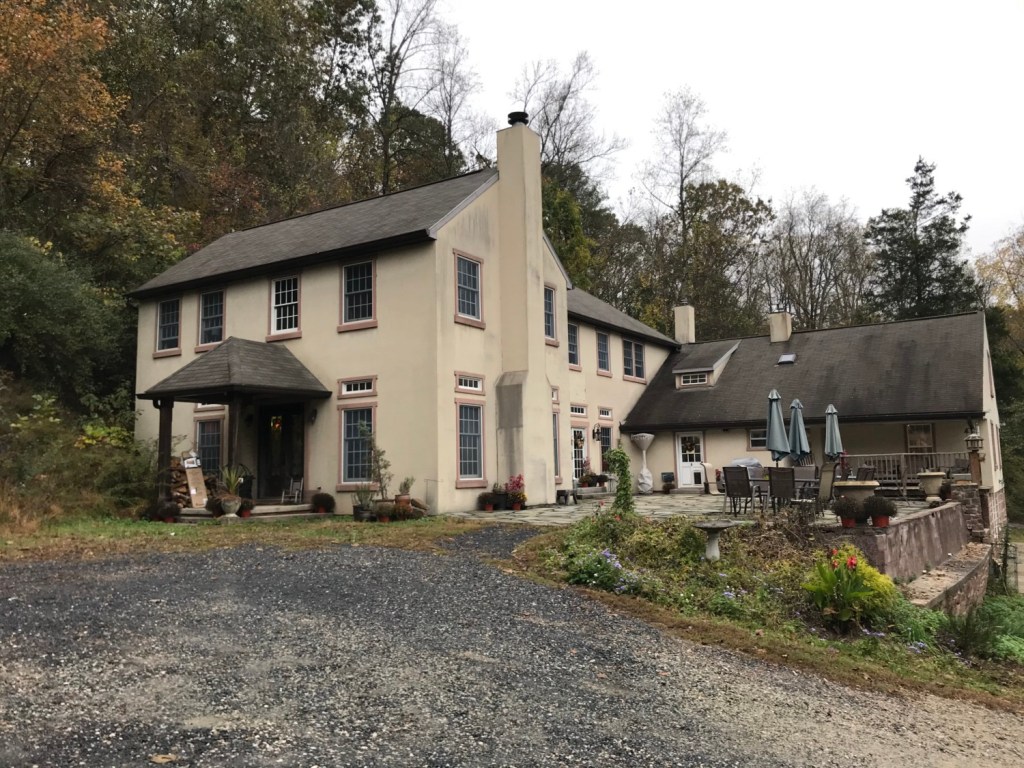
Quarry Critters in Littlestown referred me to Opalescence Weaving Studio, where fiber artist Margery Erickson lives and works. My first impression was how peaceful the property felt. Surrounded by nature, it seemed like the perfect place for creativity and reflection.
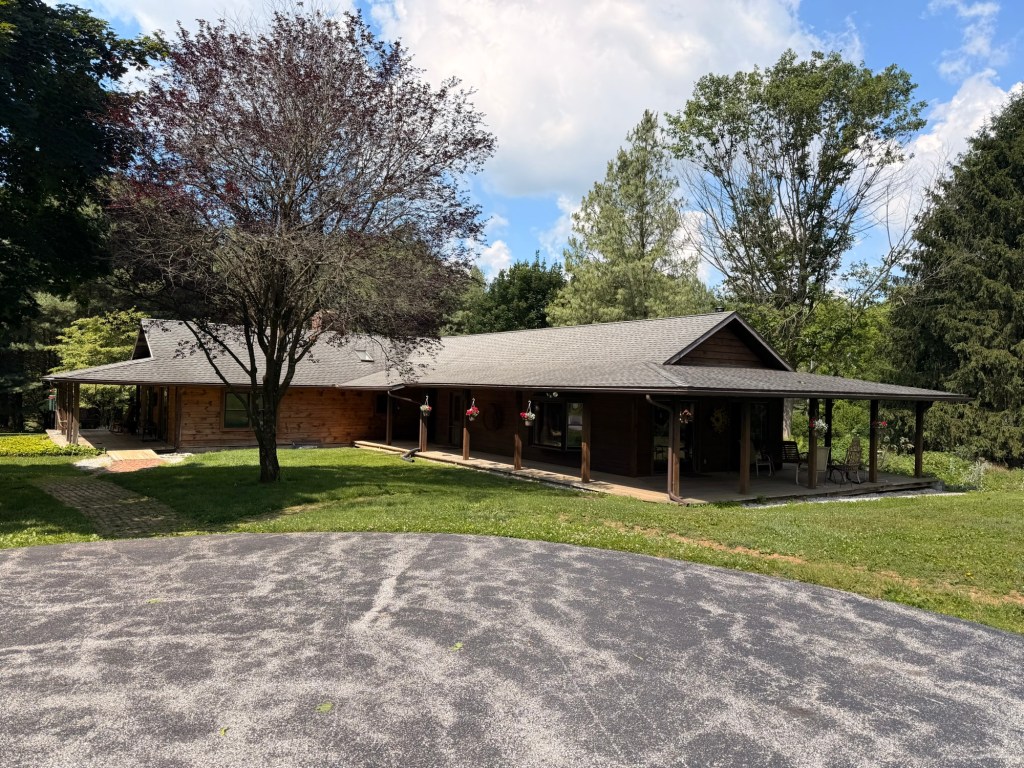
Upon entering the studio, I was greeted by Margery, whose enthusiasm was immediately infectious. A former Special Education teacher, she now works as a full-time weaver, creating handwoven garments that she sells at high-end art shows. I was excited to learn from someone who shared both an education background and a passion for fiber arts.
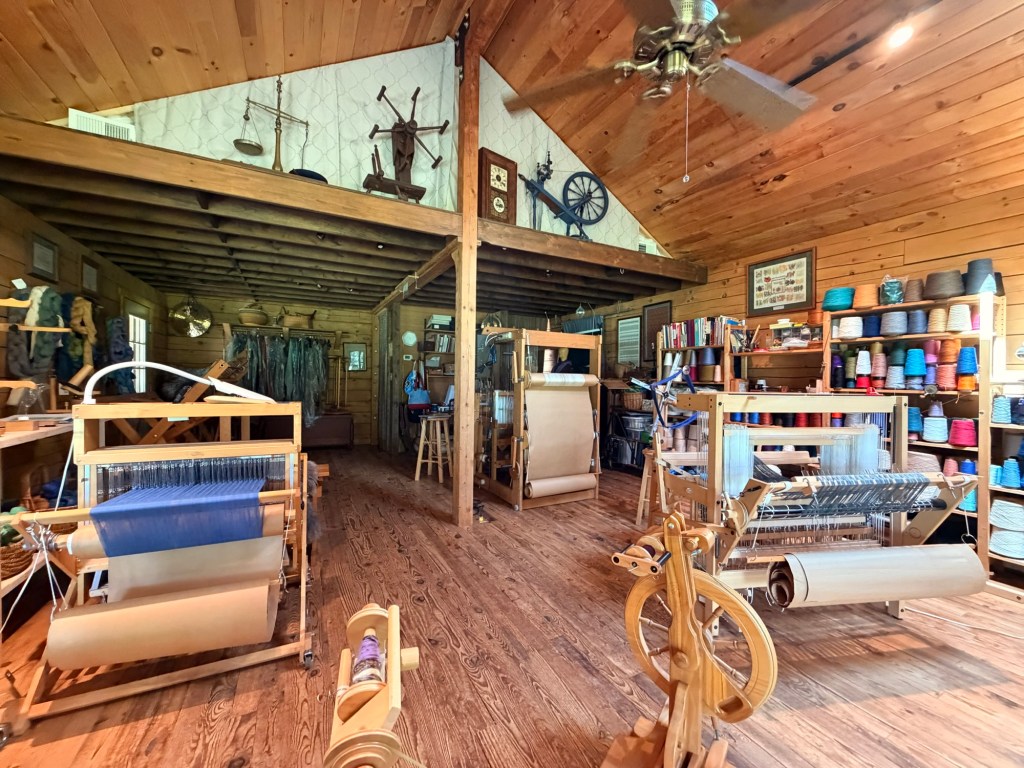
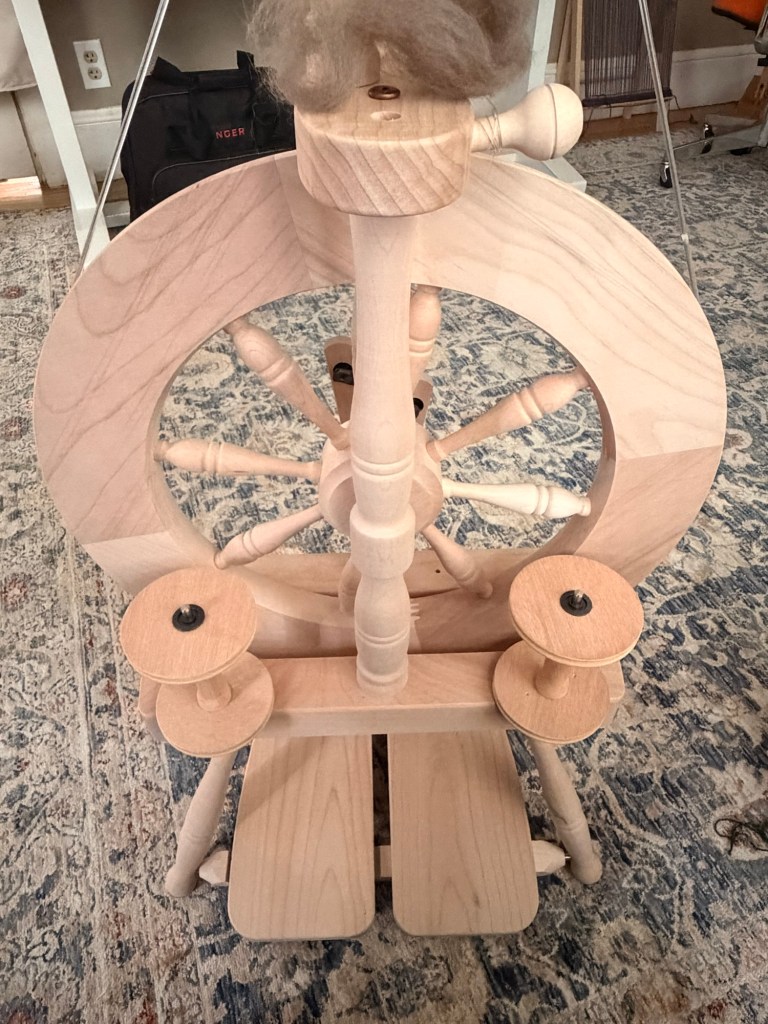
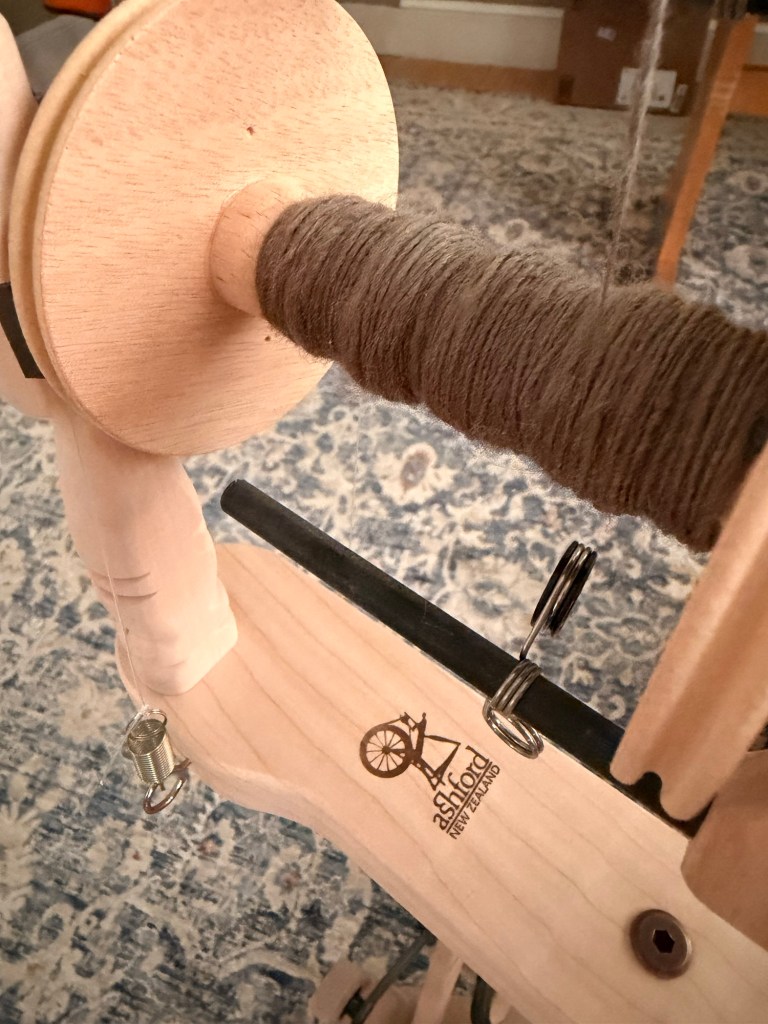
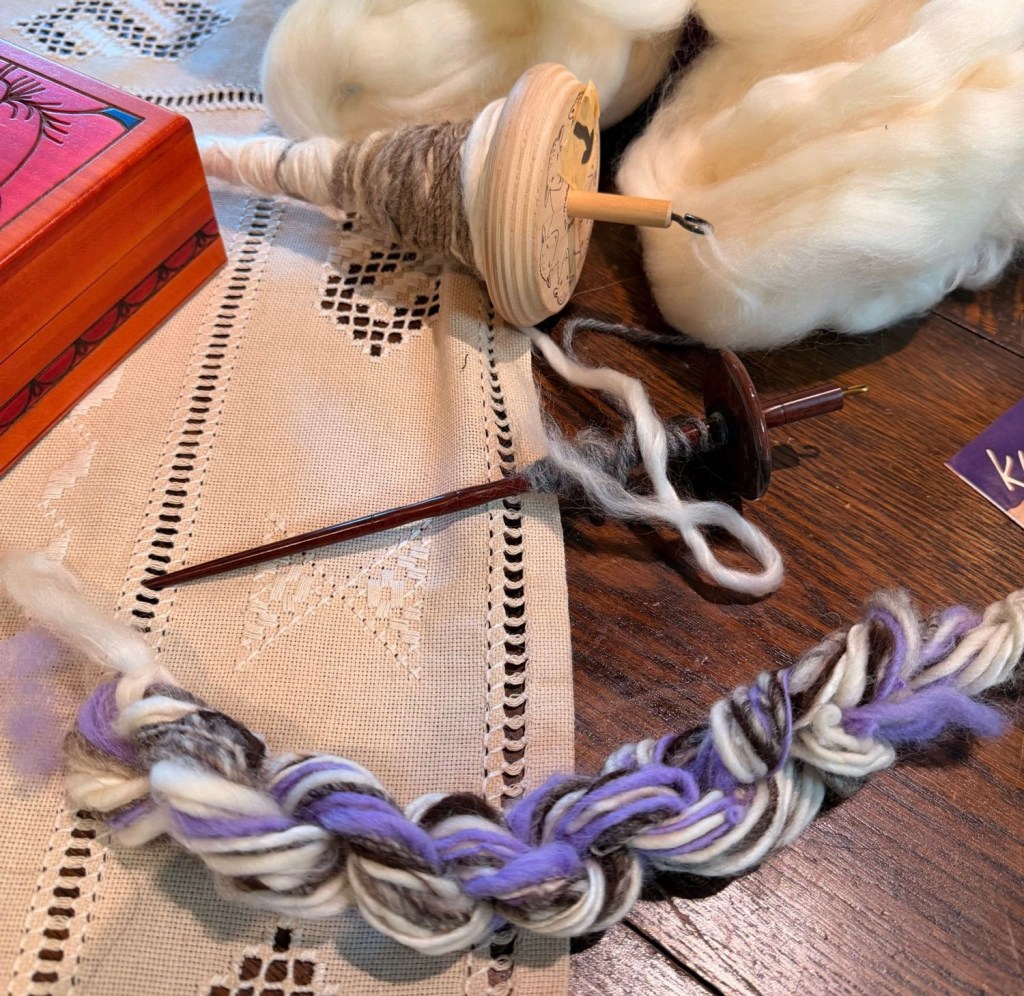
Margery first introduced me to two types of drop spindles: a top-whorl spindle and a Turkish spindle. She admitted with a laugh that her husband was actually the stronger spinner in the family, but we happily experimented with both tools together. Afterward, she introduced me to the different parts of a spinning wheel and explained what I should look for when eventually purchasing my own.
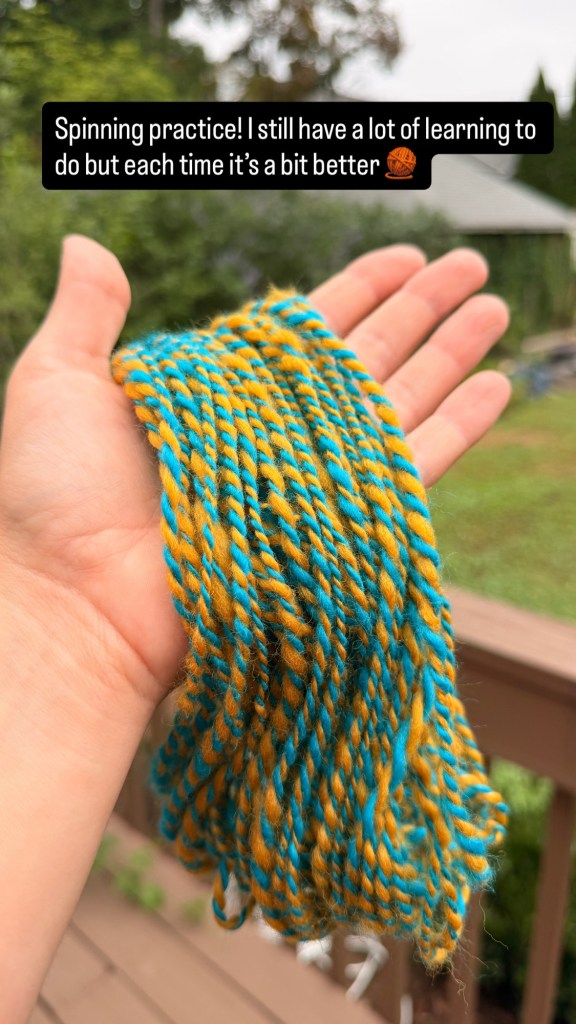
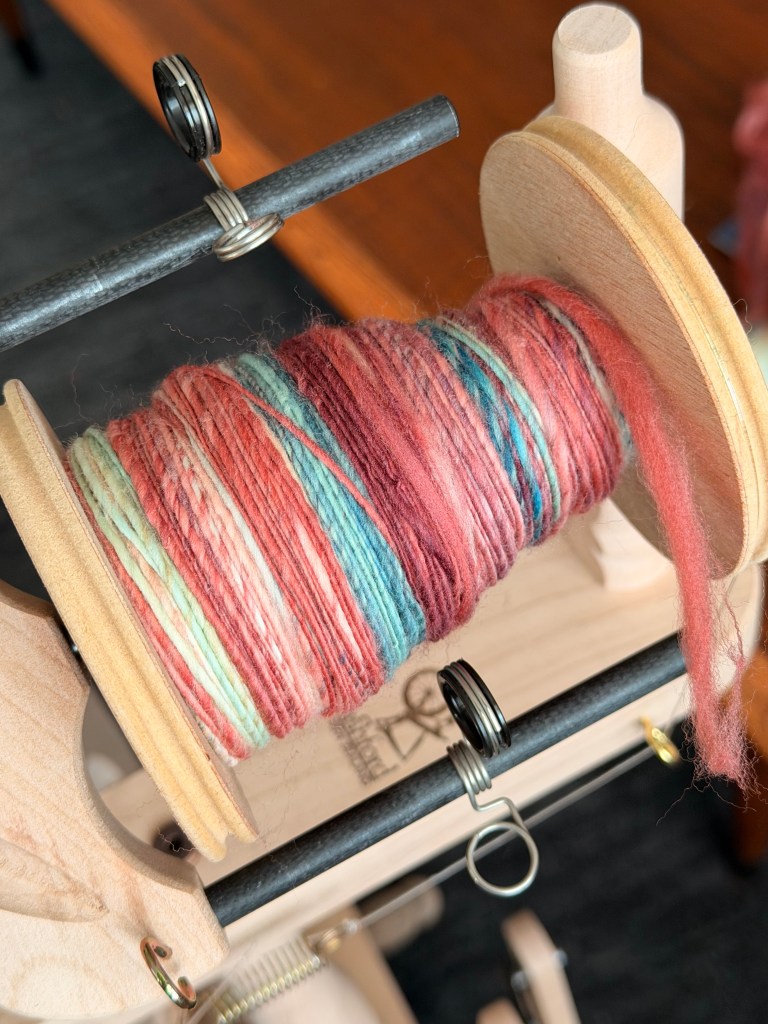
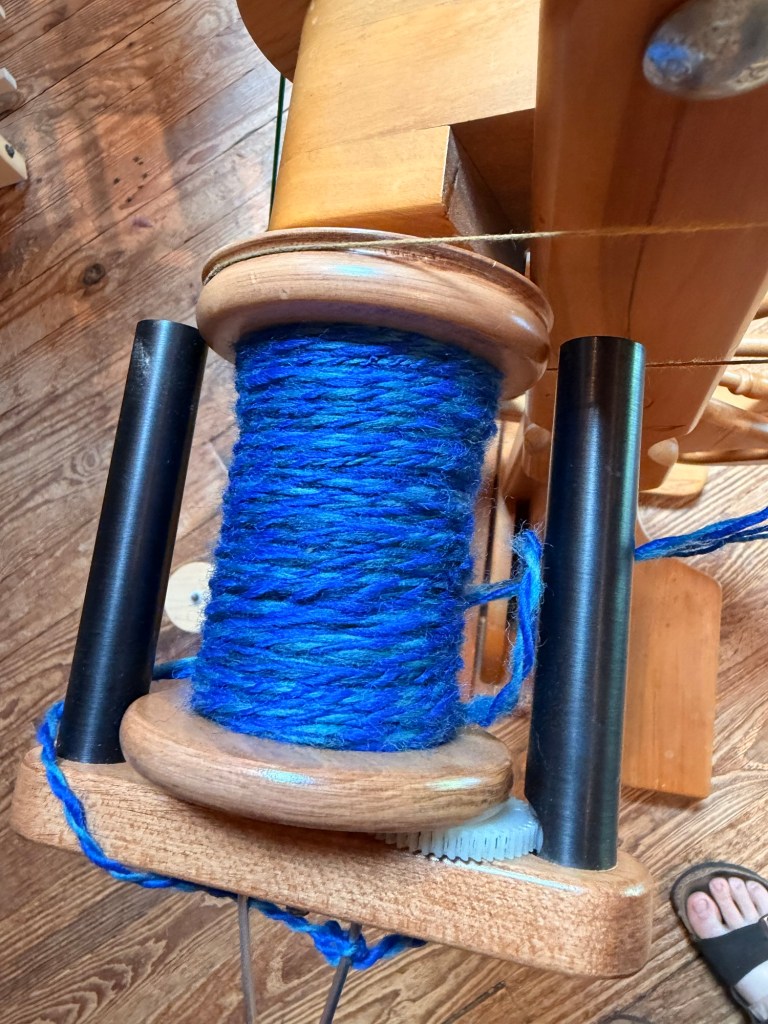
Then it was time to spin. I began with roving from a Jacob sheep, which particularly excited me because I had recently seen Jacob sheep at the Maryland Sheep and Wool Festival. The fiber was somewhat knotty but easy to draft. I can honestly say that I did not start as a perfect spinner. My yarn had plenty of lumps and bumps, and it took about ten minutes before I found a steady rhythm and began producing a more consistent yarn.
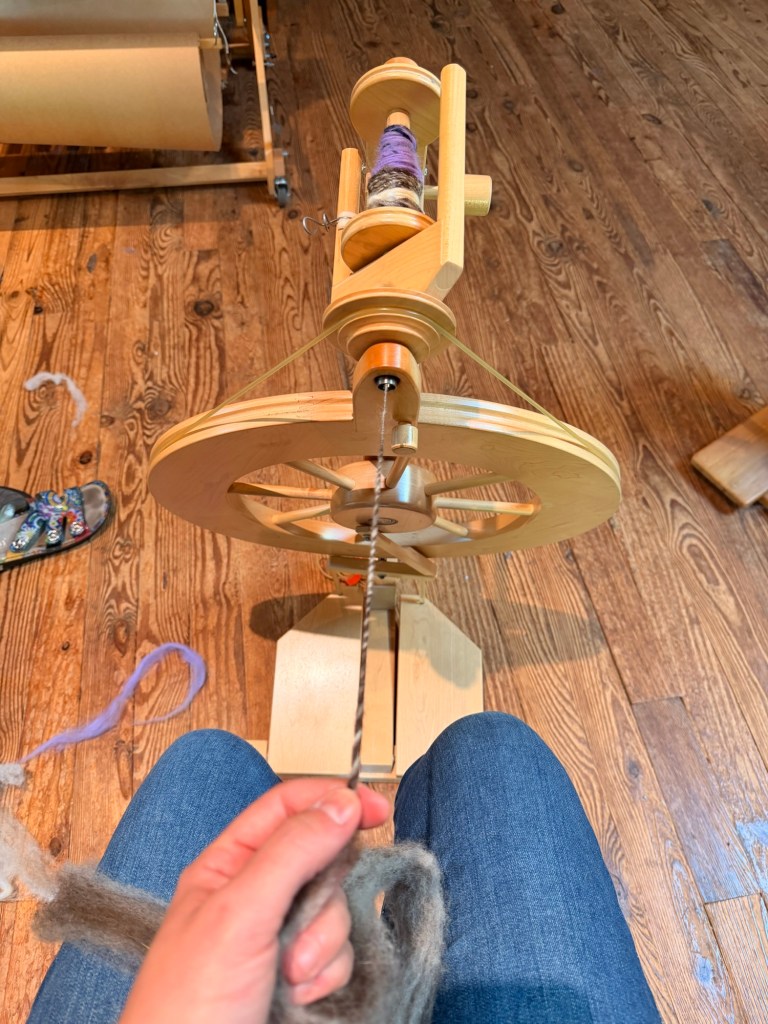
Next, Margery introduced me to wool top and then a wool-and-silk blend. These fibers were smoother and required a different touch. I quickly learned that maintaining proper tension was important; otherwise, the fibers would pull apart before enough twist could enter them. Finally, I spun alpaca fiber, which was absolutely incredible to work with. Its softness and smoothness made spinning feel effortless and joyful. The experience made me even more excited to see a Sterling wool mill where I get to see this wool become fiber for artists.
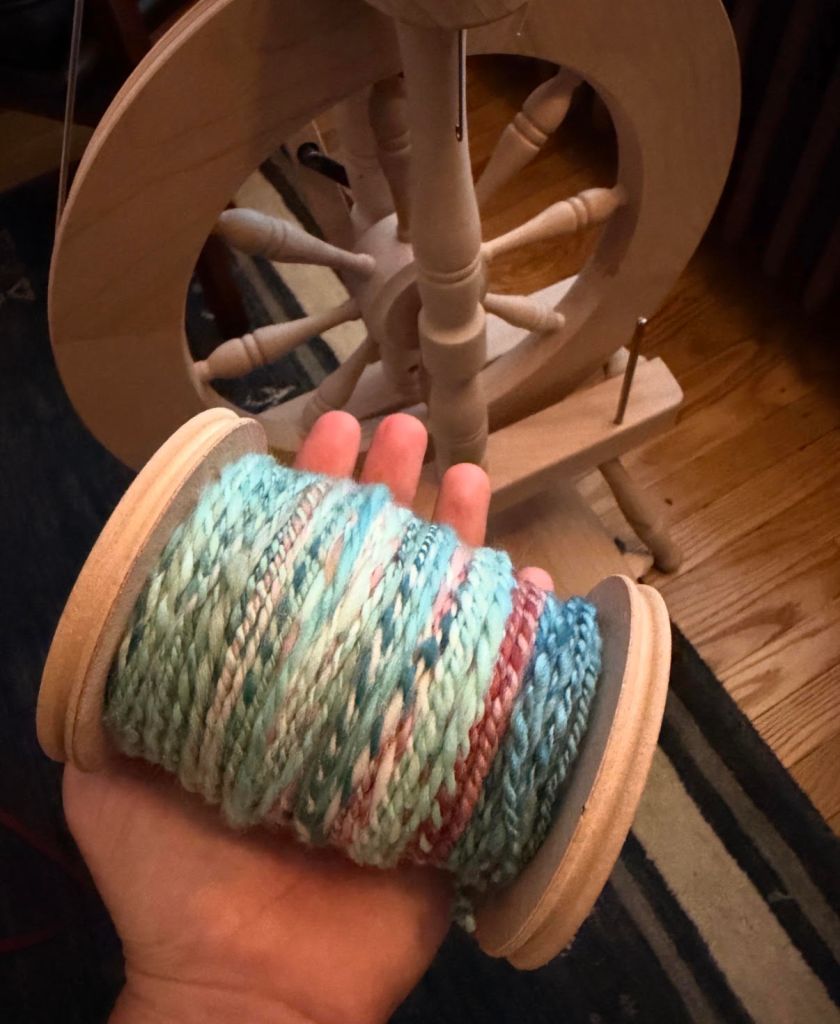
As I continued spinning, Margery demonstrated how yarn is plied after it has been spun. She pulled her own spinning wheel alongside mine and showed me the process while we talked about weaving, fiber arts, and education. Throughout the afternoon, she offered countless ideas for bringing spinning into the classroom. We discussed how students could learn on drop spindles before progressing to a spinning wheel and how important it is to focus on rhythm rather than speed. Children often want to spin as quickly as possible, but successful spinning depends on maintaining a slow, steady pace.
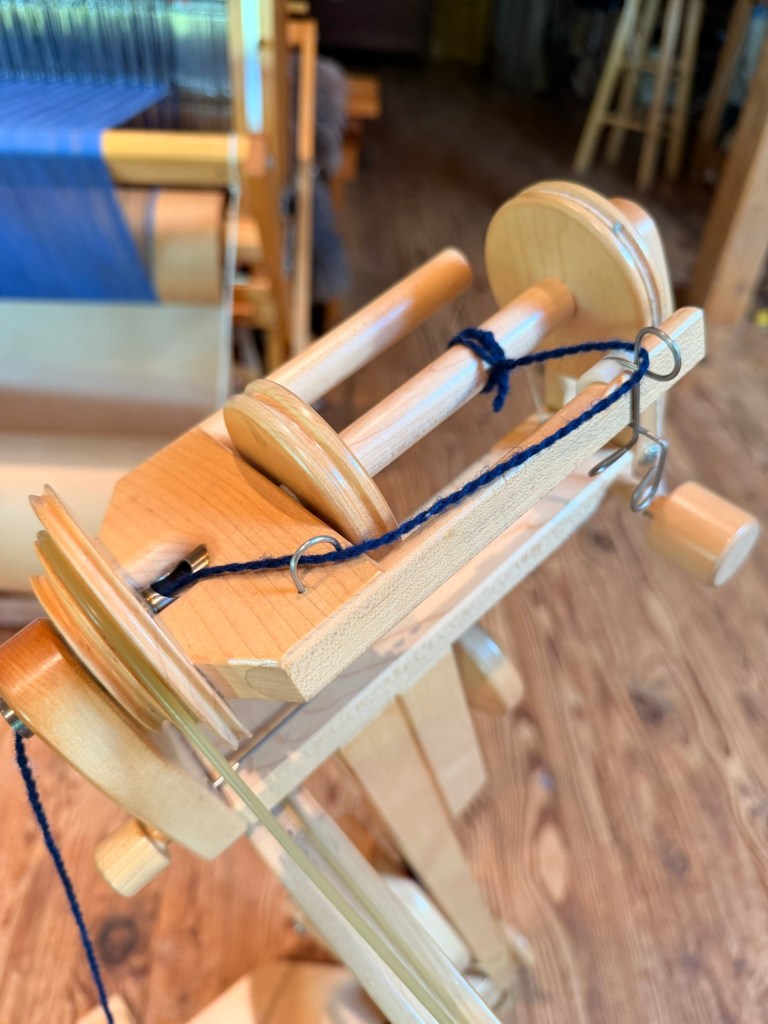
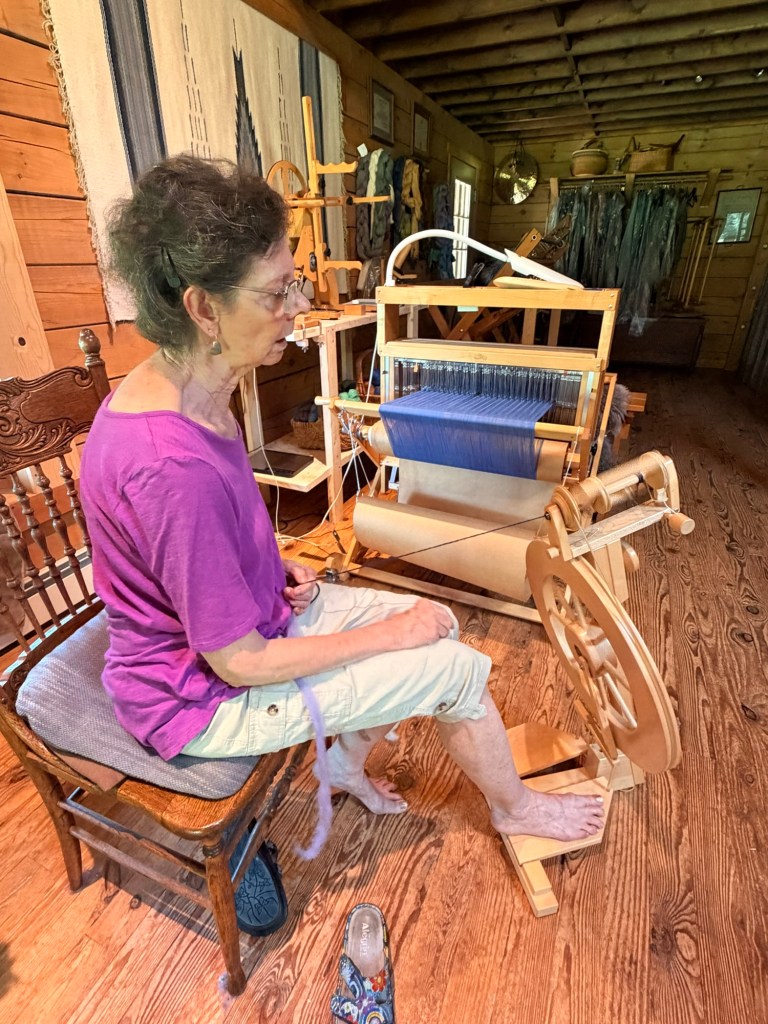
Our conversation naturally shifted toward classroom applications. We talked about what it would be like to build a large collaborative loom for students and how handspun yarn could be stored and displayed within a classroom environment. These discussions helped me envision new ways of incorporating fiber arts into my own teaching practice.
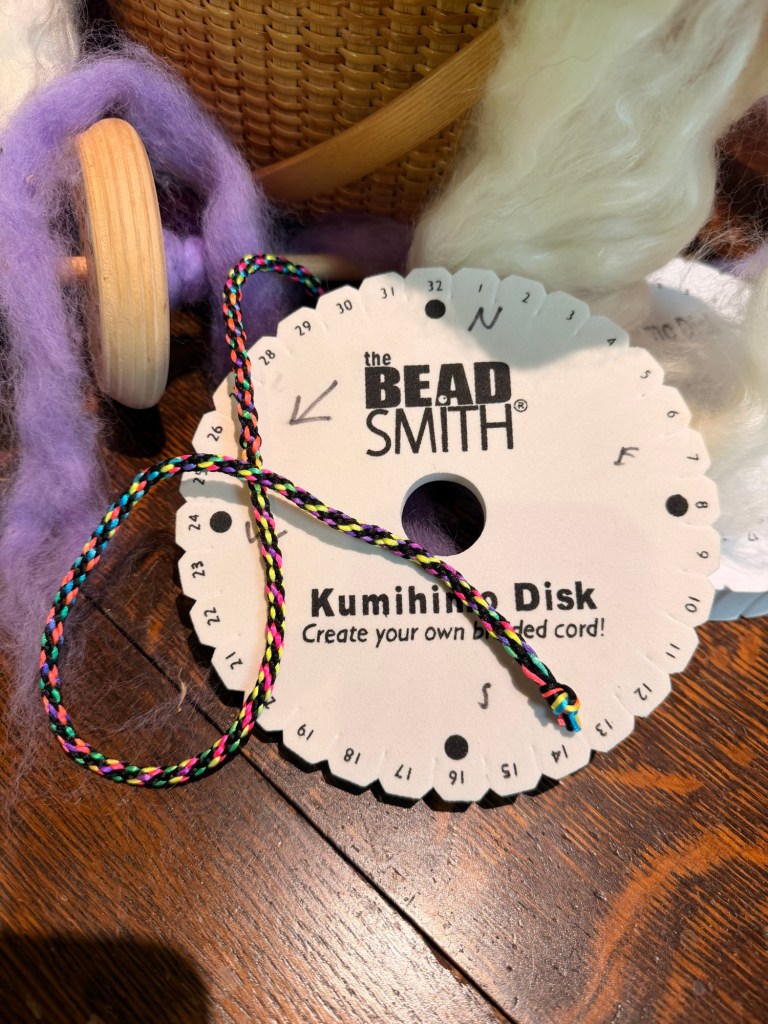
Margery then introduced me to Kumihimo disks, simple braiding tools she frequently used during her years as a Learning Support teacher. She explained that they were ideal for students who finished work early or needed a short break during the day. One comment especially resonated with me: “When kids have their hands moving, their brains quiet down for learning.” As someone who teaches many students with ADHD and sensory needs, I immediately recognized the value of this idea. Margery shared that she was comfortable allowing students to braid while she taught because she understood how movement can support attention and self-regulation.
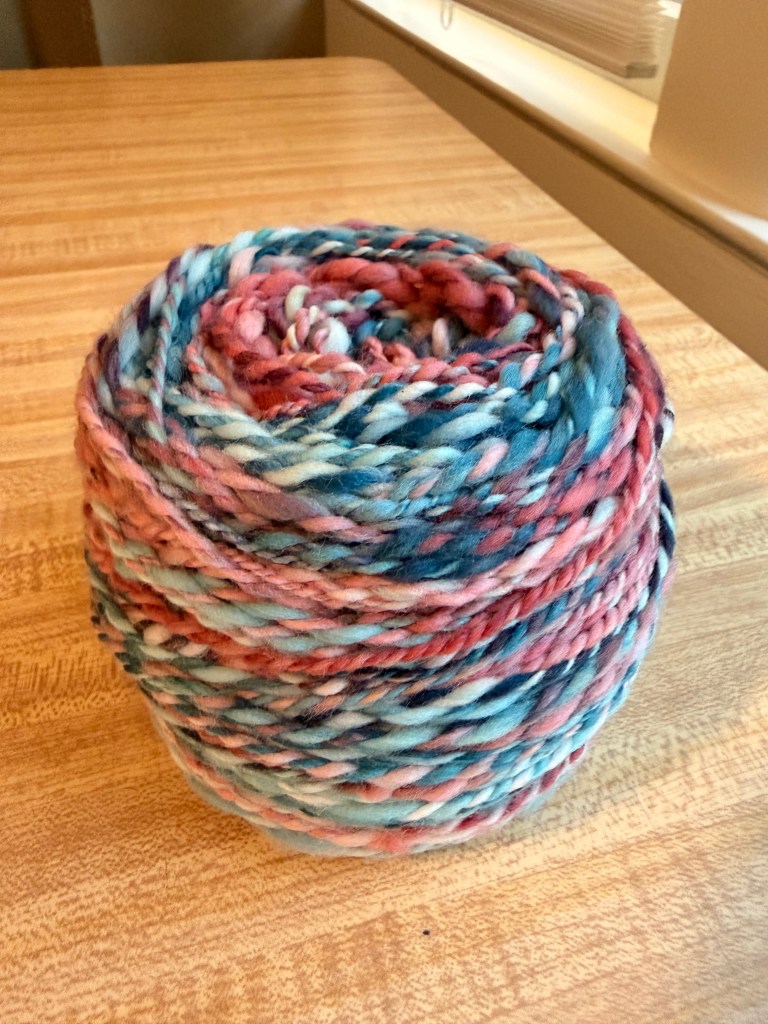
Afterward, she helped me remove my handspun yarn using a niddy noddy, a tool used to wind freshly spun yarn into organized skeins before washing and finishing.
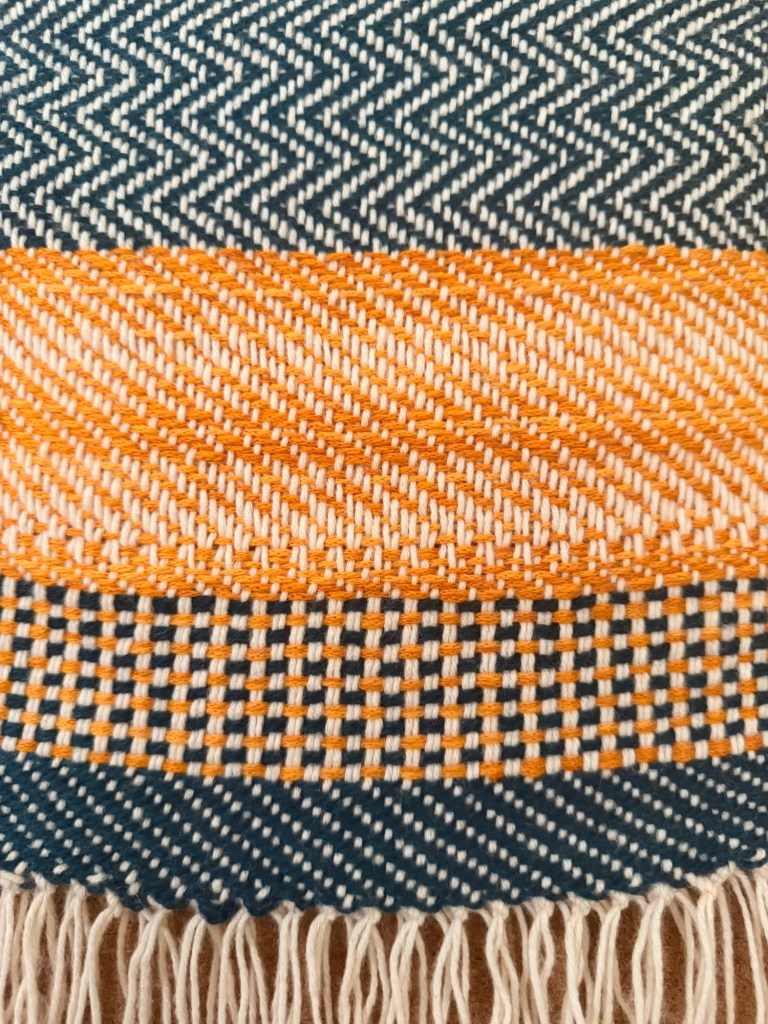
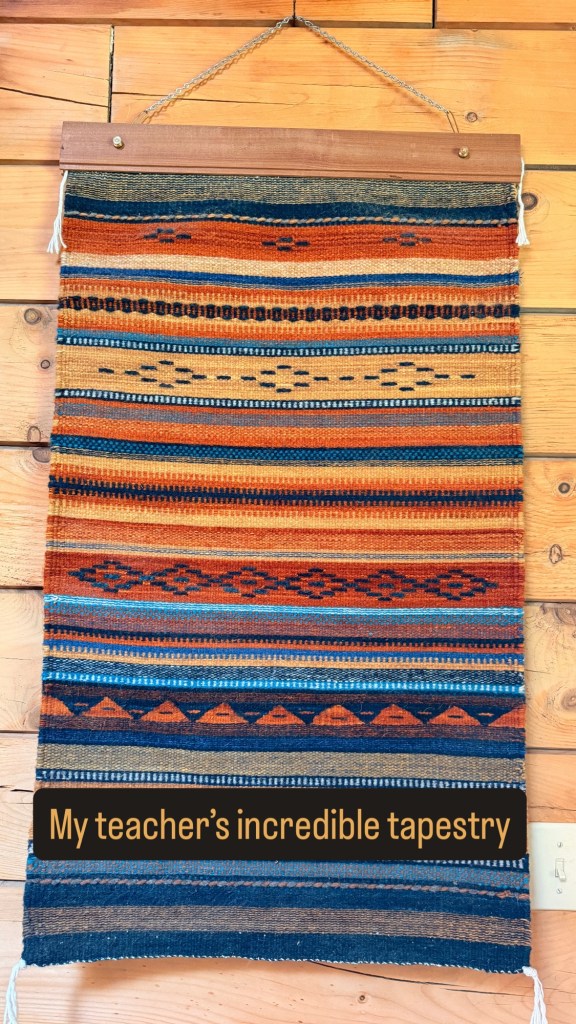
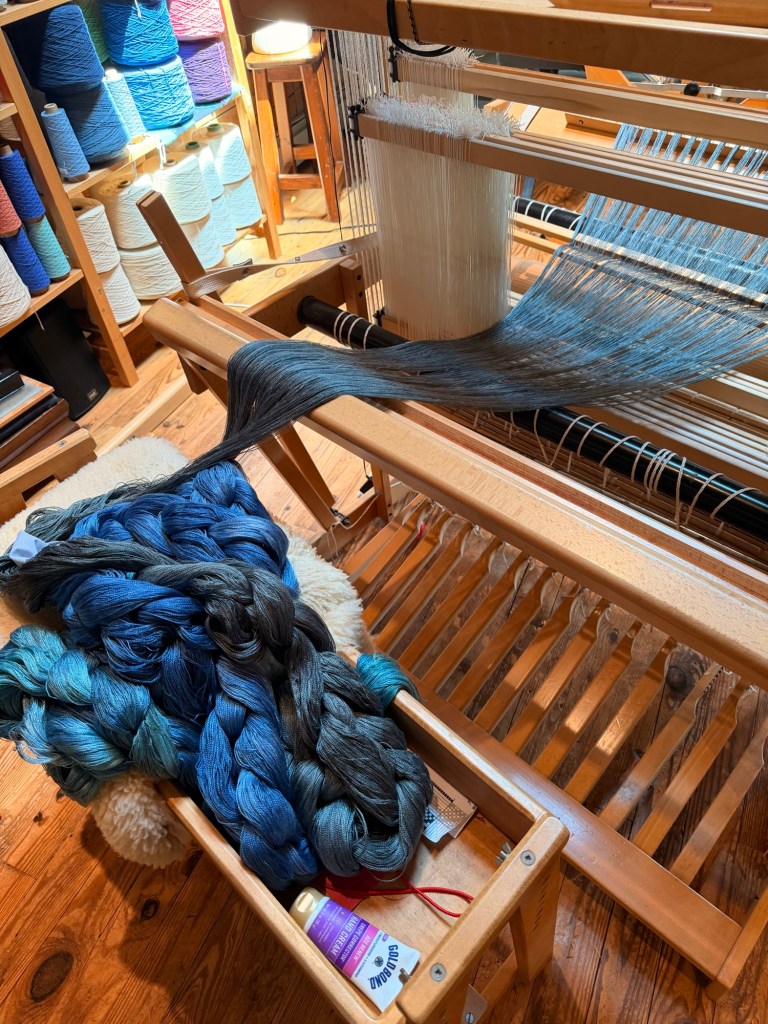
Before I left, Margery gave me a tour of her studio and shared examples of her weaving. She explained that she rarely works with wool for garments because many people find it uncomfortable against the skin. Instead, she prefers fibers such as Tencel and rayon, which drape beautifully and feel soft when worn. Seeing her handwoven garments up close was inspiring. Every piece reflected years of practice, technical knowledge, and careful craftsmanship.
What fascinated me most was how different this experience felt from the SAORI weaving class I had taken just a few days earlier. SAORI weaving embraces improvisation, experimentation, and freedom from rules. Margery’s work, in contrast, was highly refined, carefully planned, and technically precise. Rather than seeing these approaches as opposites, I began to see them as two equally valuable ways of making. One celebrates creative exploration and self-expression, while the other celebrates mastery, intentionality, and craftsmanship.
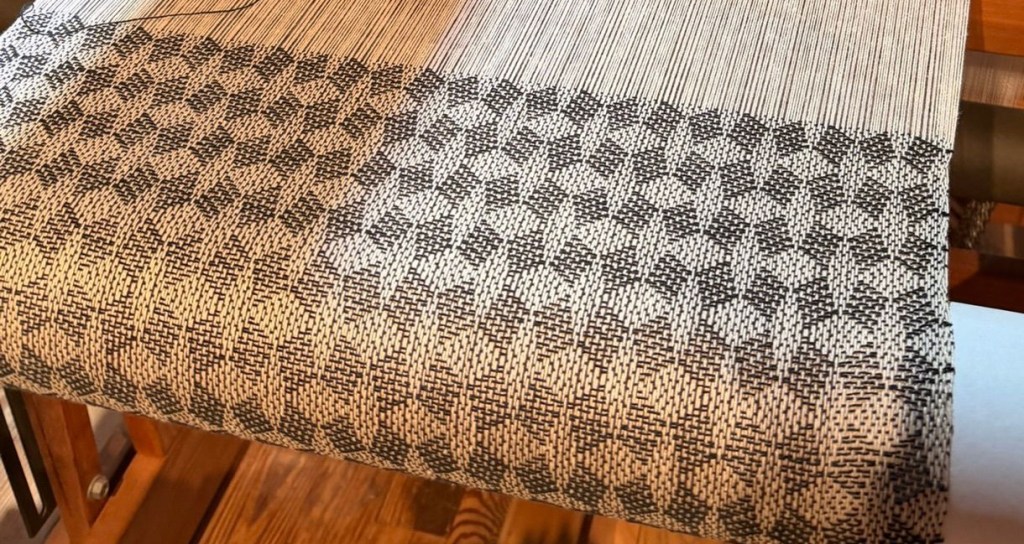
I left Opalescence Weaving Studio not only with my first handspun yarn, but also with a deeper appreciation for the many paths that exist within fiber arts. Margery is both an exceptional weaver and a gifted teacher, and I feel incredibly fortunate to have learned from her.
Fellowship Notes 6/12/2026
My next stop was a class at Red Stone Glen Fiber Arts Center in York, Pennsylvania. Red Stone Glen is a weaving studio known for its impressive instructors, including Tom Knisely. The class I attended was called Sewing for Handweavers and was taught by Judy Donovan.
Before class began, I had the opportunity to talk with Judy about how she first became interested in sewing. I learned that she had been sewing since she was eleven years old. Because her tastes were never quite conventional, sewing allowed her to create unique clothing while still staying within her budget. Over the years, her passion for sewing expanded into making protest pieces, whimsical art-to-wear garments, costumes, and quilts.
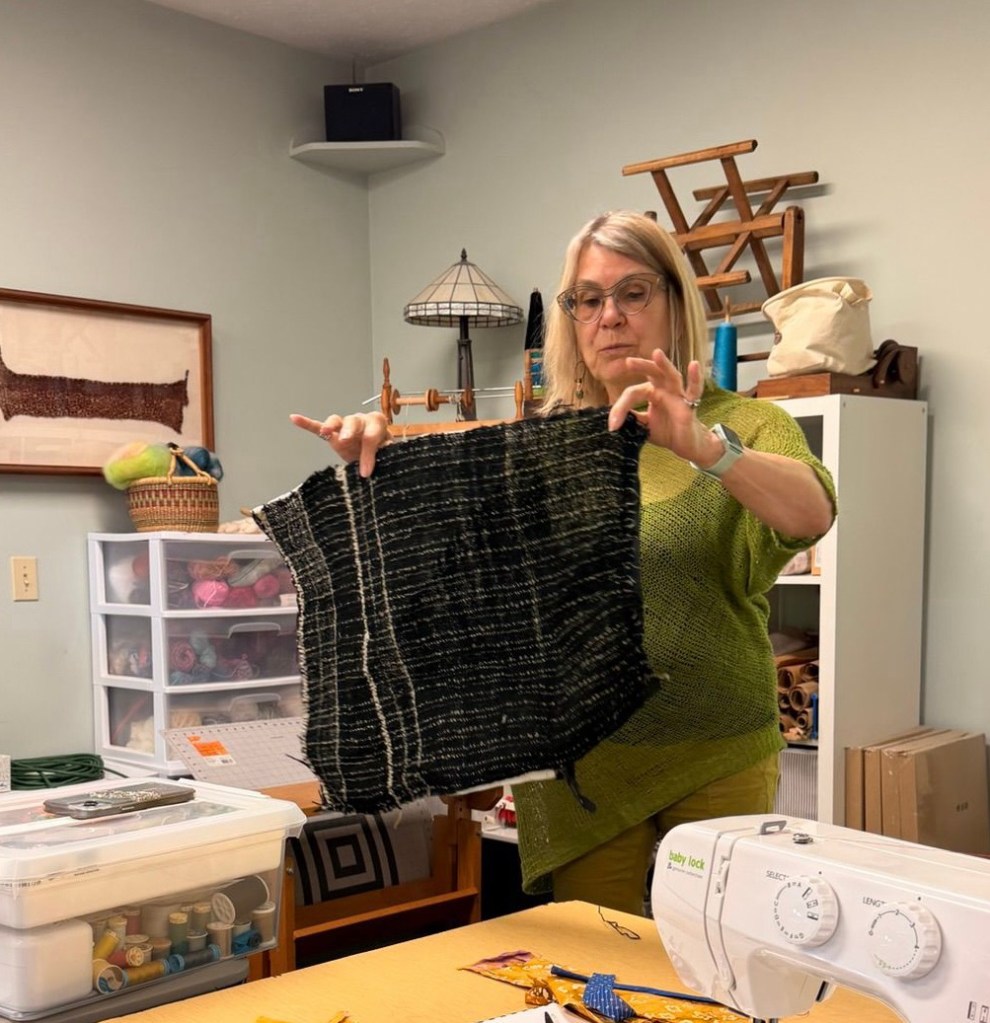
One idea that particularly resonated with me was Judy’s view of garments as a form of architecture. She explained that sewing handwoven cloth brings an added layer of excitement because she gets to imagine how a flat, two-dimensional piece of fabric will transform into a three-dimensional object. As someone who is learning more about weaving, I found this perspective inspiring. It reminded me that textile creation does not end at the loom; the woven cloth can become something functional, expressive, and deeply personal.
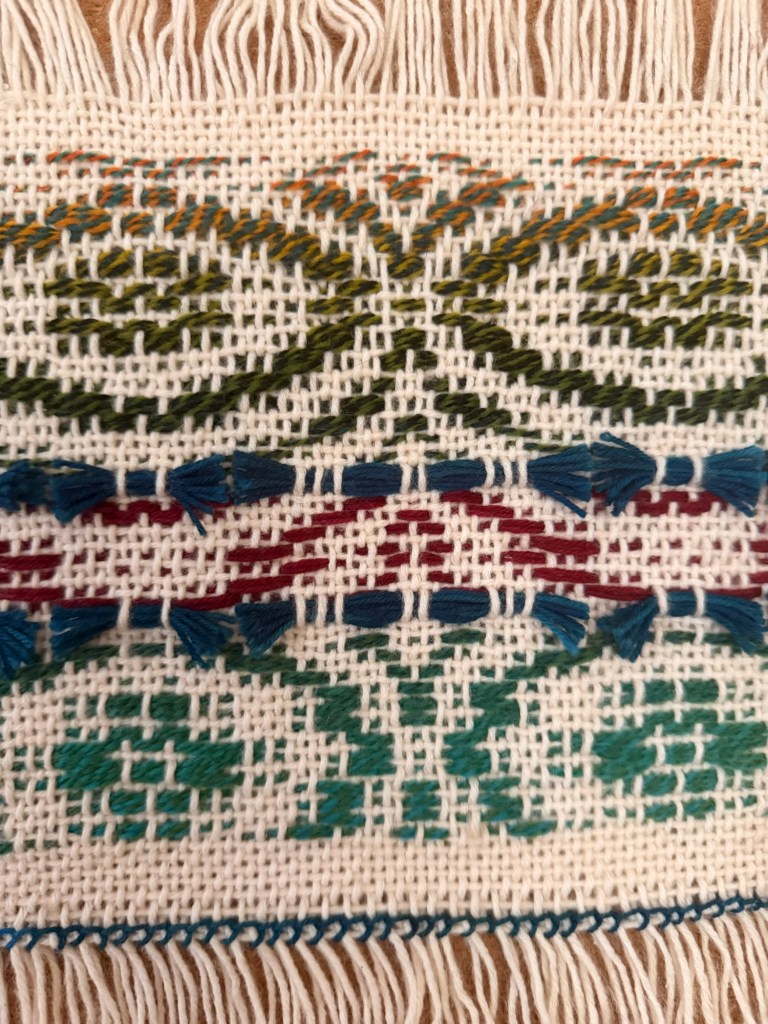
The people that I attended class with also had very interesting backgrounds. I sat next to a woman named Kathy who was good friends with Margery, the weaver who had taught me to spin just a few days before. Kathy was there to learn more about how to use her handwoven fabrics in creative ways. She generously shared examples of her work with me, and I was completely blown away and inspired. She had woven fabric in the style of early American coverlets, bands featuring Scandinavian and South American designs, and countless other samples that demonstrated years of exploration and craftsmanship.
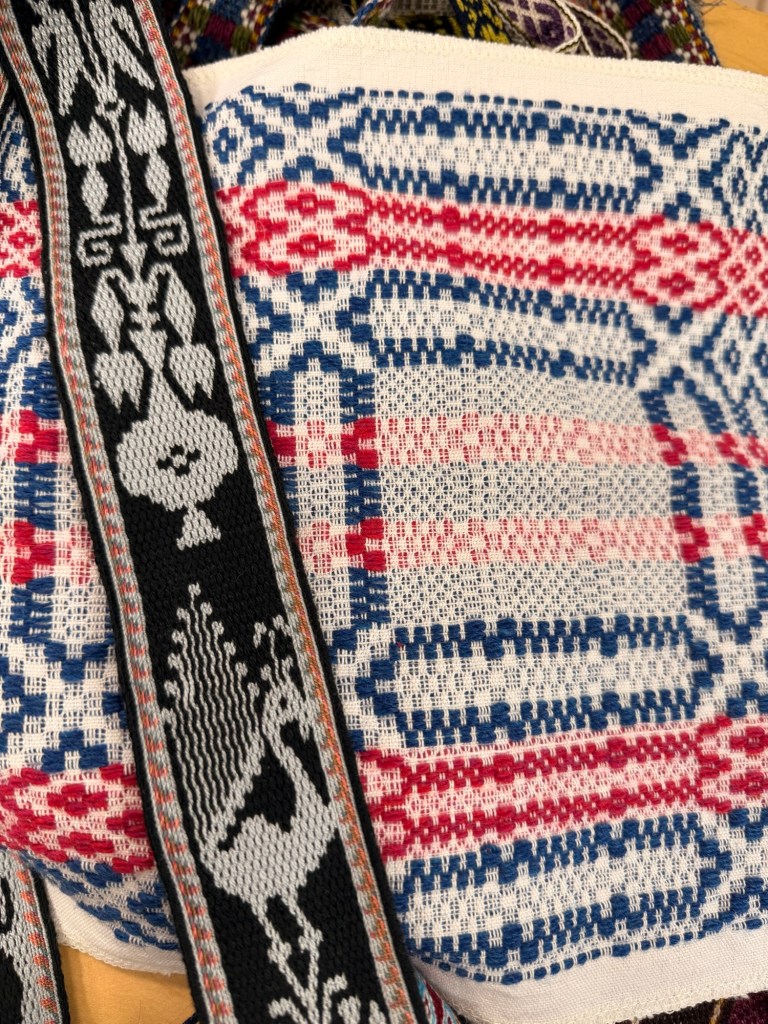
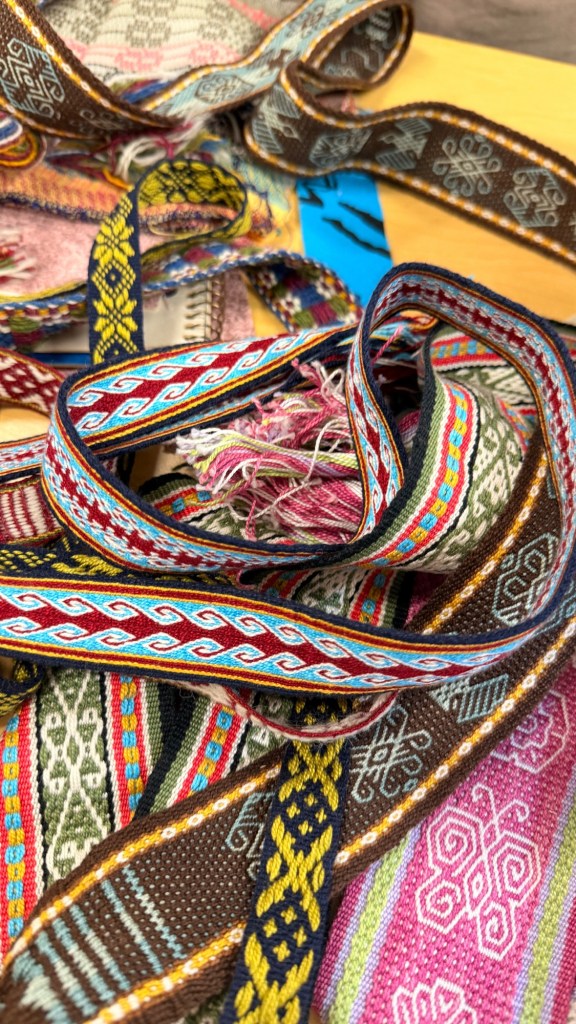
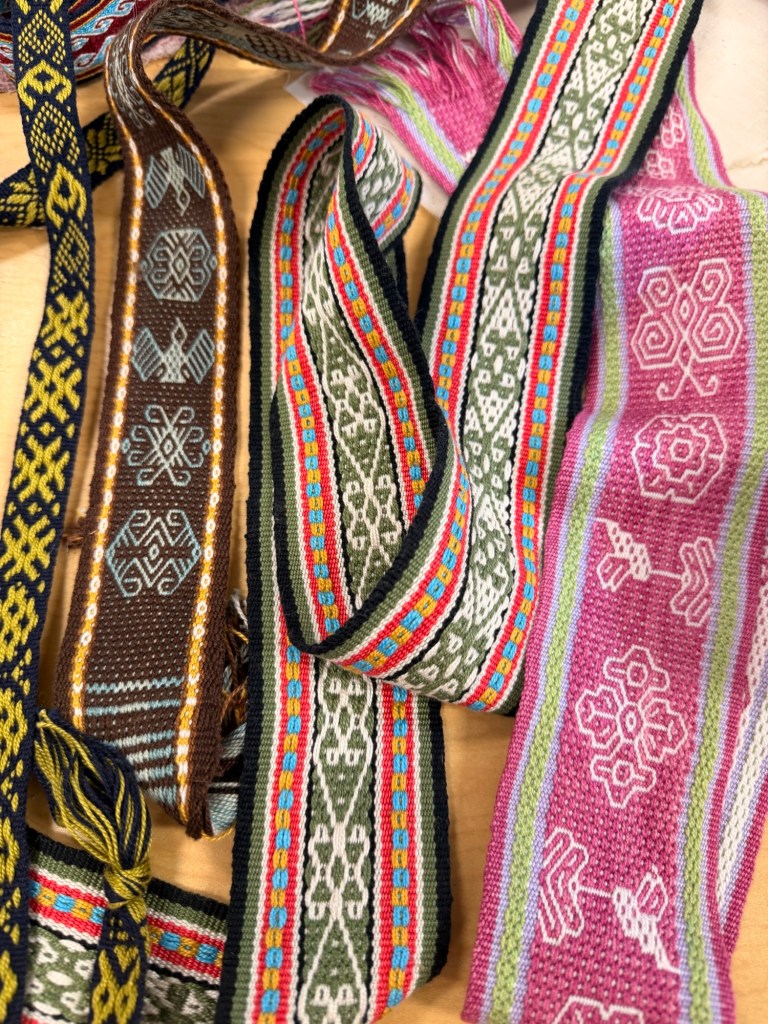
When I asked whether she used her handwoven fabrics to make finished items, I was surprised by her answer. For the past twenty years, she had simply created fabric for the joy of creating it. She only began weaving after retirement and told me she wished she had started sooner. Her passion reminded me that creativity does not have an expiration date and that learning new skills can bring fulfillment at any stage of life.
When class started, the first thing we learned was how to construct a variety of seams. We practiced pinked seams, flat-felled seams, and Hong Kong seams. Along the way, we learned about helpful tools such as Steam-A-Seam for keeping seams in place, the importance of pressing fabric before sewing, how to identify and adjust parts of a sewing machine, and how to apply batting and backing for quilting projects.
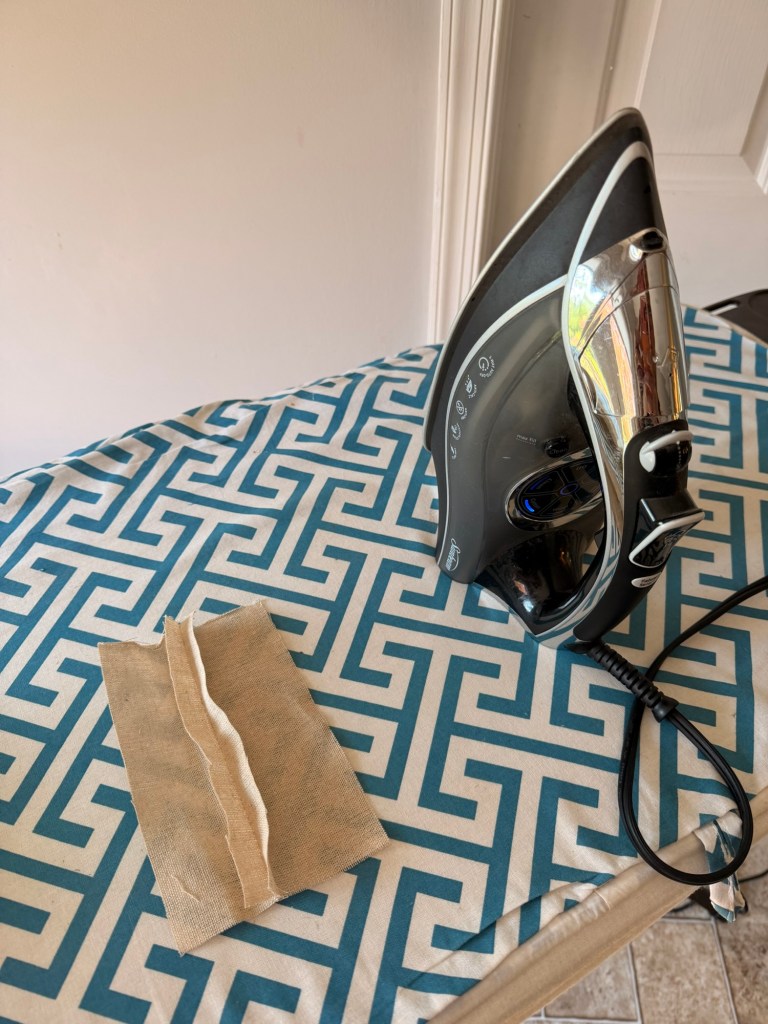
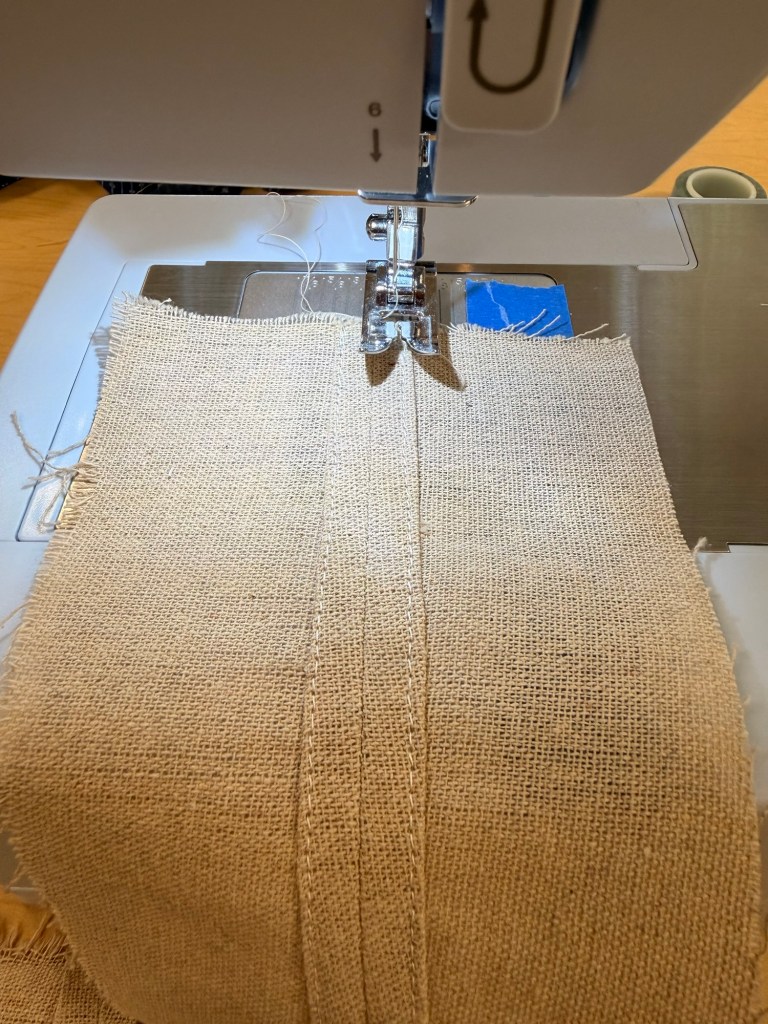
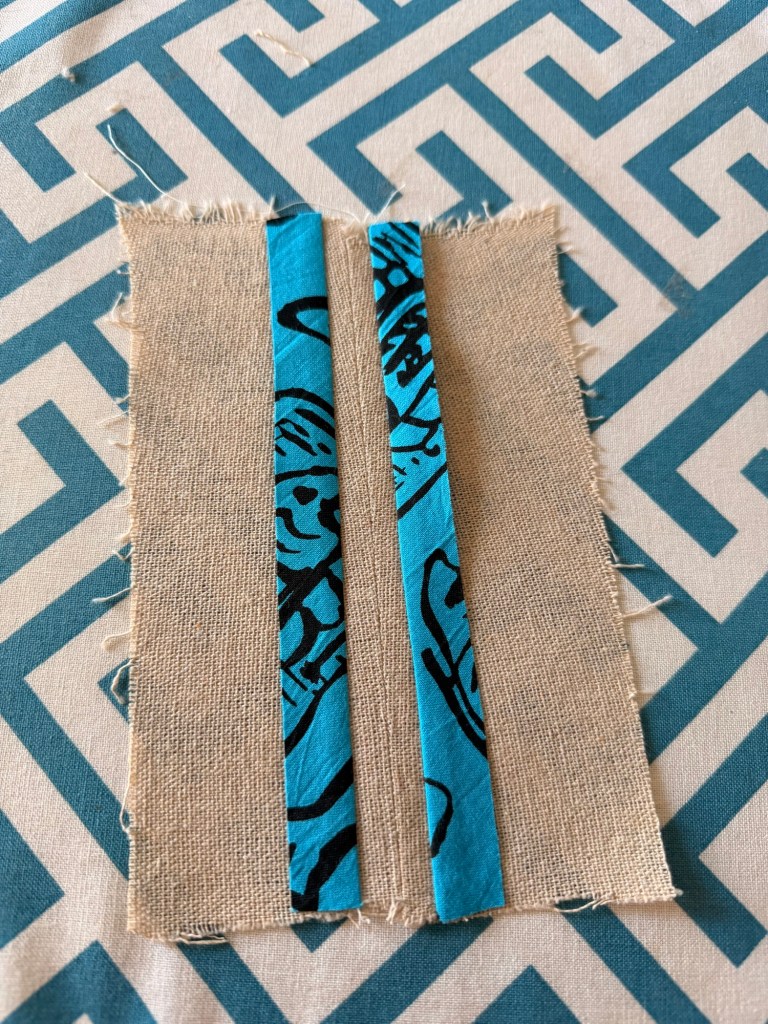
Afterward, Judy provided us with handwoven fabric and demonstrated techniques for sewing it safely while preventing the fibers from fraying. It was exciting to finally work directly with handwoven cloth and begin to understand the unique considerations involved in transforming it into a finished object.
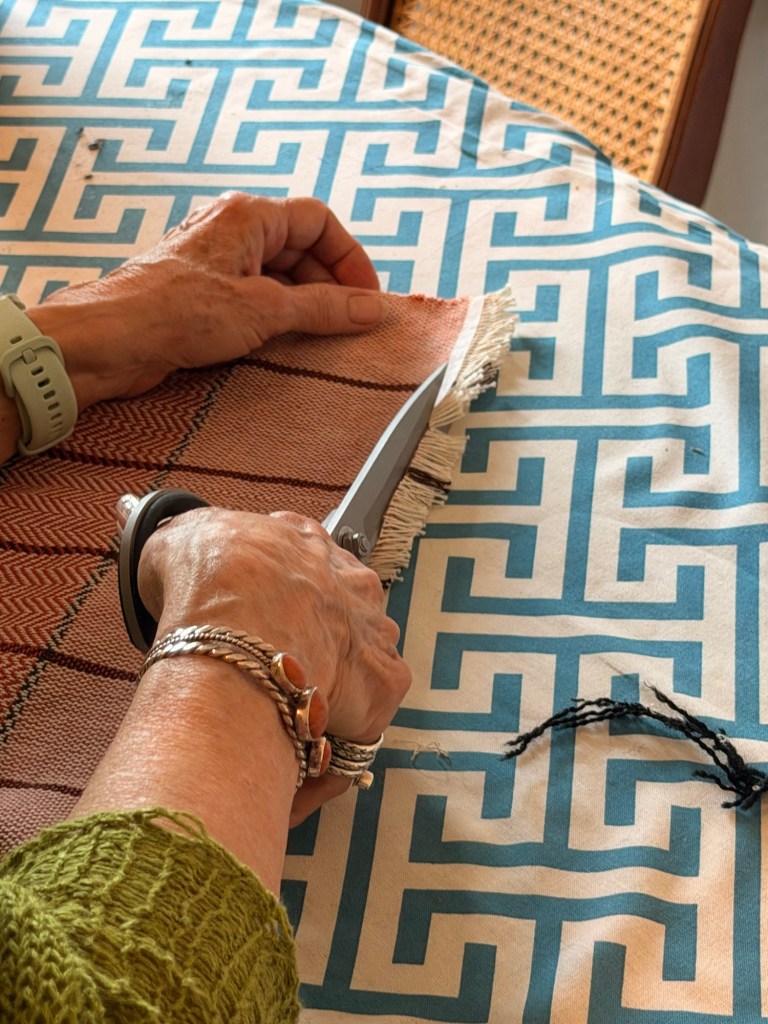
As the day went on, I began to appreciate how many individual skills and traditions come together to create a finished textile. Just a few days earlier, I had been learning how to spin wool into yarn. Now I was learning how woven fabric could be sewn into something useful and lasting. For perhaps the first time, I could clearly see the entire journey from fiber to yarn, yarn to cloth, and cloth to a functional object. Each step requires its own knowledge, creativity, and craftsmanship, yet they are all interconnected. It gave me a deeper appreciation for the generations of people who created their own textiles out of necessity and for the artists who continue these traditions today. More importantly, it reminded me that every handmade textile represents not only skill, but also time, intention, and often a personal story.
One of my classmates, an elderly man named Tom, introduced himself and shared that he had enrolled in the class because his wife had recently passed away. They had both been handweavers, and he still had a collection of her handwoven fabric. He wanted to learn how to use it and transform it into something meaningful rather than letting it sit unused. His story was another reminder that textiles are often connected to memories, relationships, and personal histories. Fabric can become much more than cloth; it can serve as a tangible connection to the people and experiences we cherish.
This experience reinforced an important lesson that has emerged throughout my fellowship: textiles are deeply human. Whether created for necessity, artistic expression, cultural tradition, or personal remembrance, they tell stories about the people who make and use them. As an educator, I hope to help my students see that art is not simply about creating objects. It is also about preserving experiences, expressing identity, and finding connections between ourselves and others. Through weaving, sewing, and other textile traditions, students can explore not only materials and techniques, but also the stories that give those materials meaning.
7/25/2026
Beginning Quilting was a natural choice for my fellowship because Lancaster County is famous for its rich quilting history. My students come from all over the world, yet they are surrounded by Lancaster’s cultural traditions every day. I want them to learn the art of quilting while also bringing their own voices to this historic craft, creating pieces that reflect how Lancaster has evolved and what is meaningful to them today.
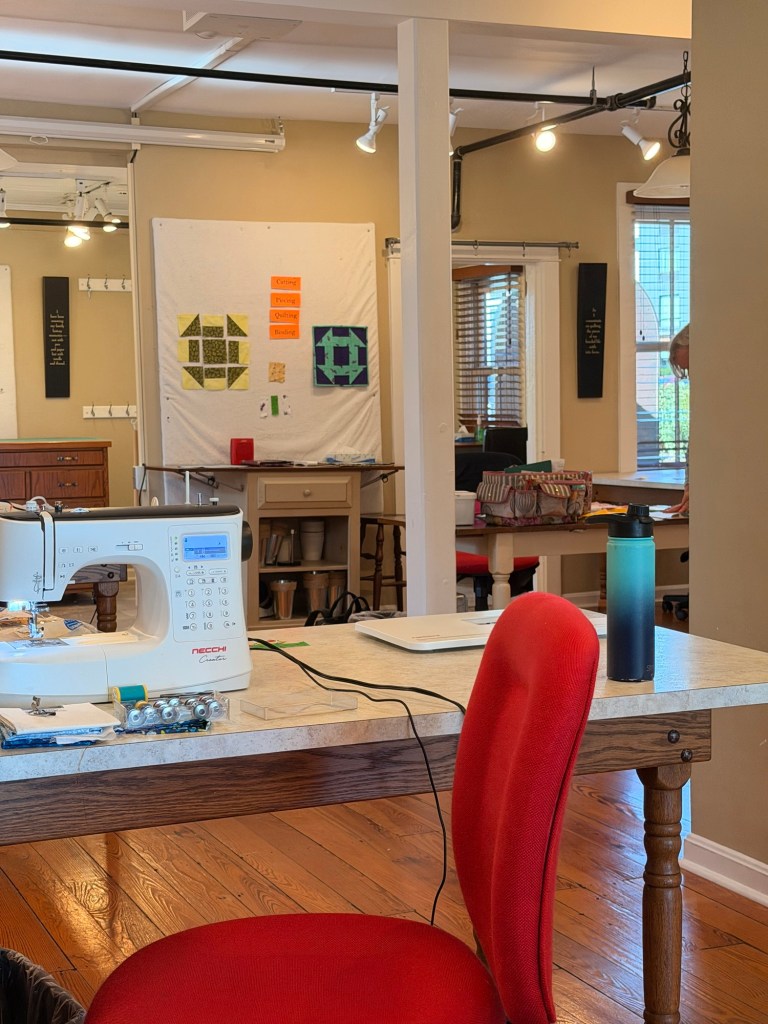
When I arrived, I joined a group of about fifteen participants who were all setting up their sewing machines. As someone with very little sewing experience, I was grateful to be seated next to a woman who generously shared her knowledge whenever I had a question. I was surprised to learn how far many people had traveled to attend the class—some had driven nearly three hours.
As I looked around the classroom, I noticed felt-covered design boards used to arrange fabric pieces before sewing, large cutting tables, and dedicated ironing stations. Seeing the felt boards immediately sparked an idea for my own classroom. I envision creating similar felt-covered building boards where students can manipulate felt geometric shapes to create quilt-inspired patterns, buildings, people, landscapes, and other original designs before committing to a final composition. These boards would provide an open-ended invitation to create while also reinforcing important mathematical concepts such as geometry, symmetry, rotation, reflection, patterning, and spatial reasoning. Because the pieces can be easily rearranged without fear of making mistakes, they would also encourage student choice, creative risk-taking, and emotional regulation by offering a calming, low-pressure way to experiment and problem-solve. I immediately recognized how versatile this simple tool could become as both an art center and a meaningful cross-curricular learning experience.
Our instructor introduced herself and shared that she had previously been an English teacher. I have been surprised throughout this fellowship by how many fiber artists have backgrounds in education. Every instructor I have worked with so far has been a former teacher, reinforcing the strong connection between teaching, creativity, and lifelong learning.
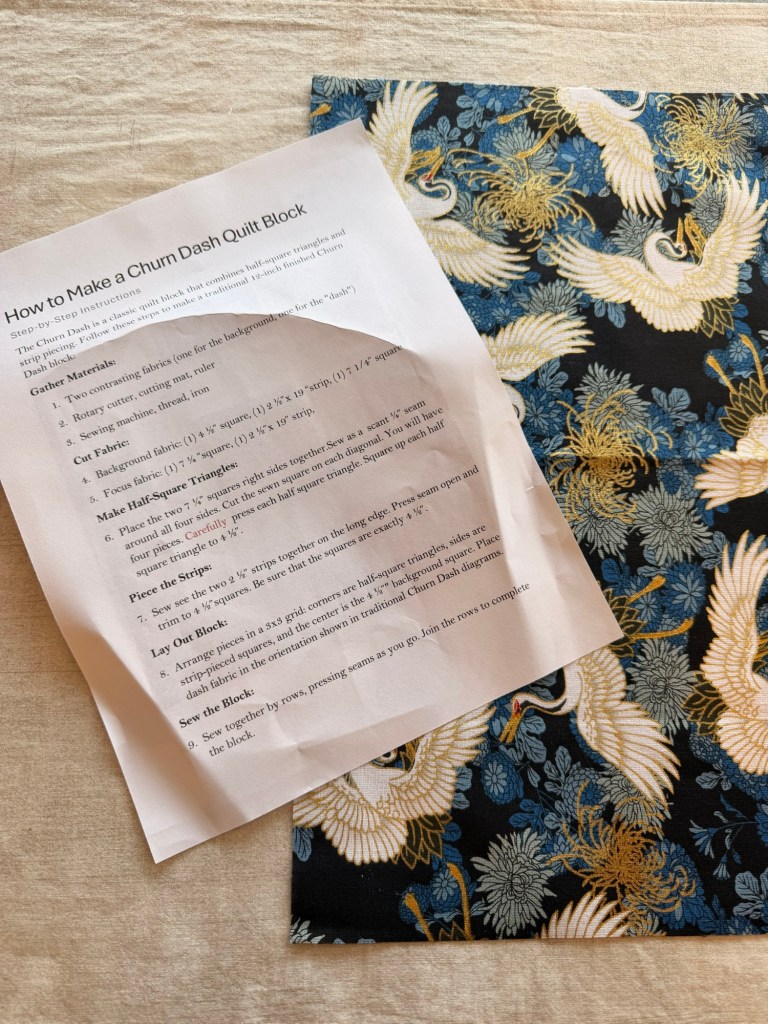
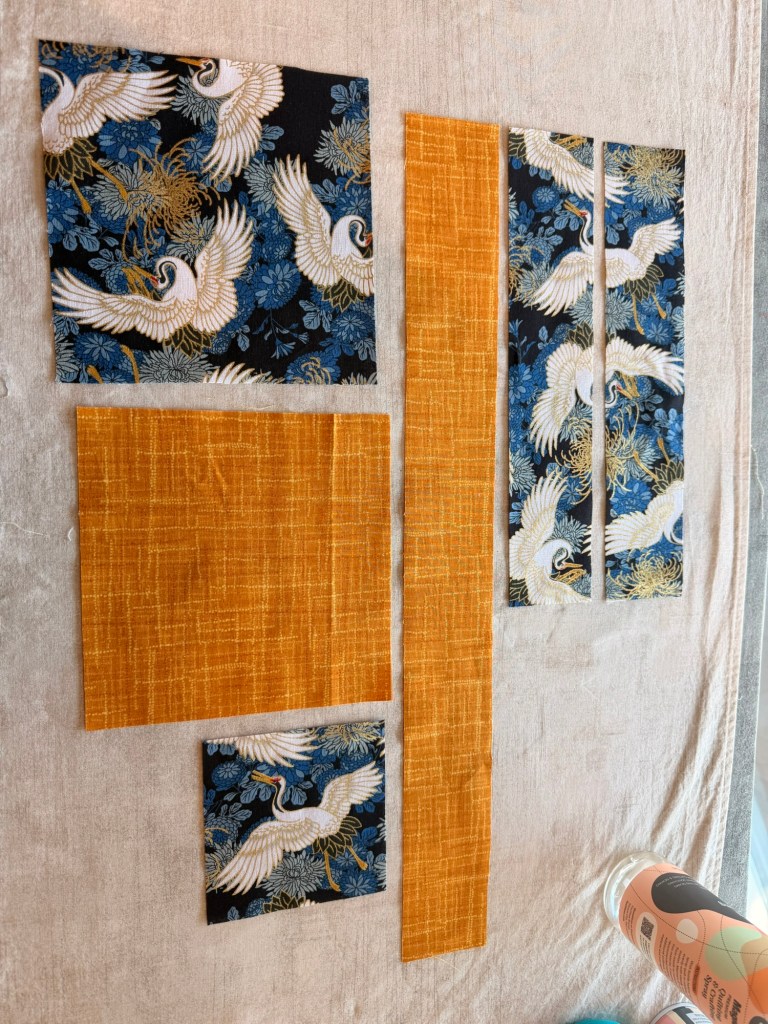
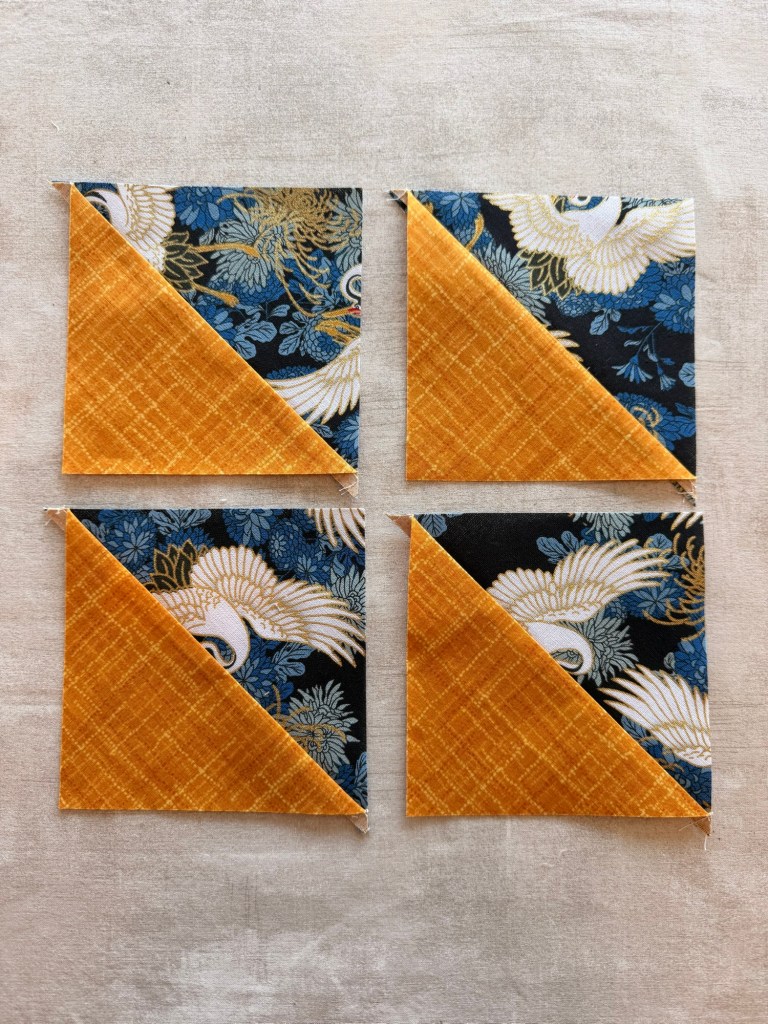
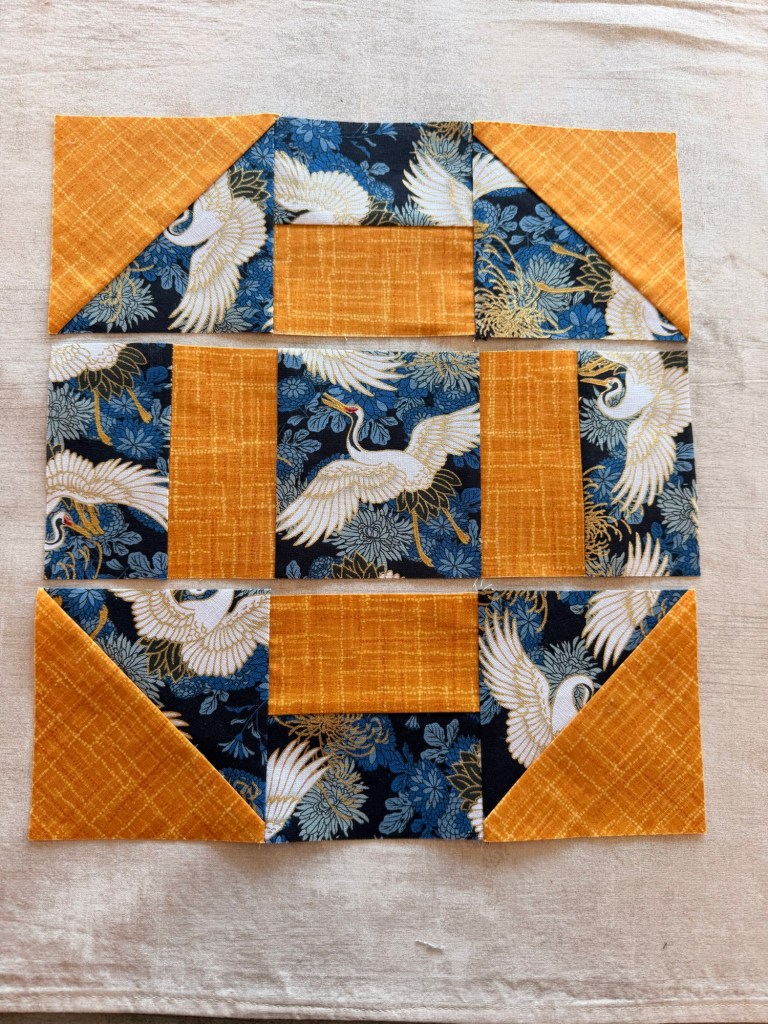
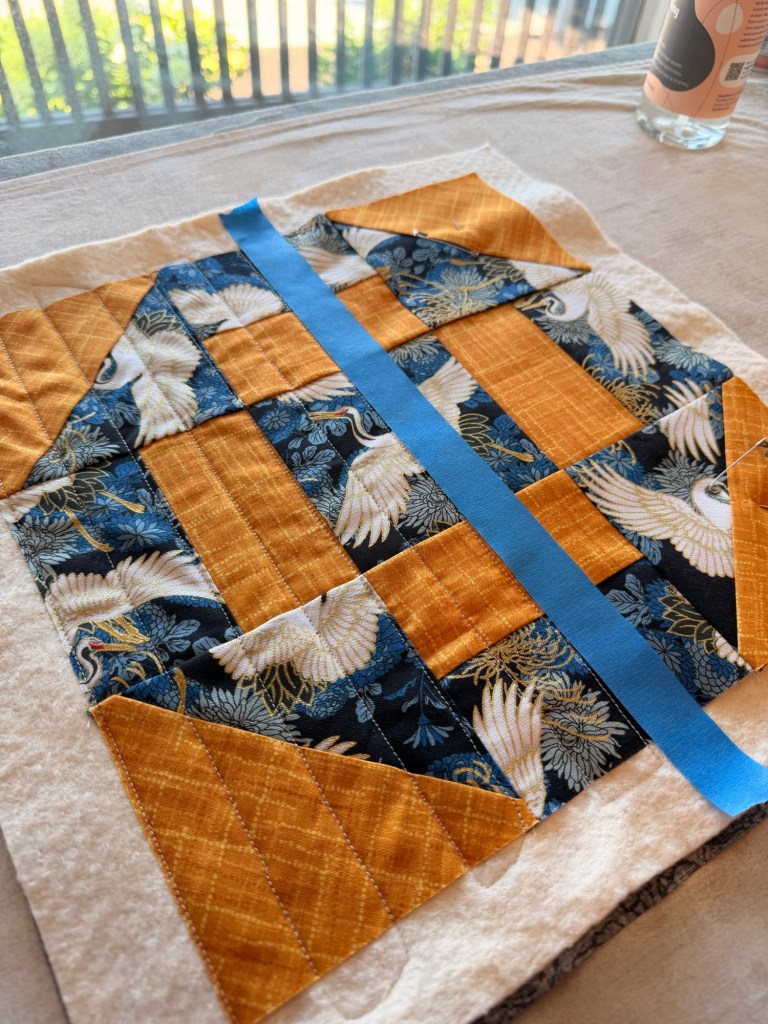
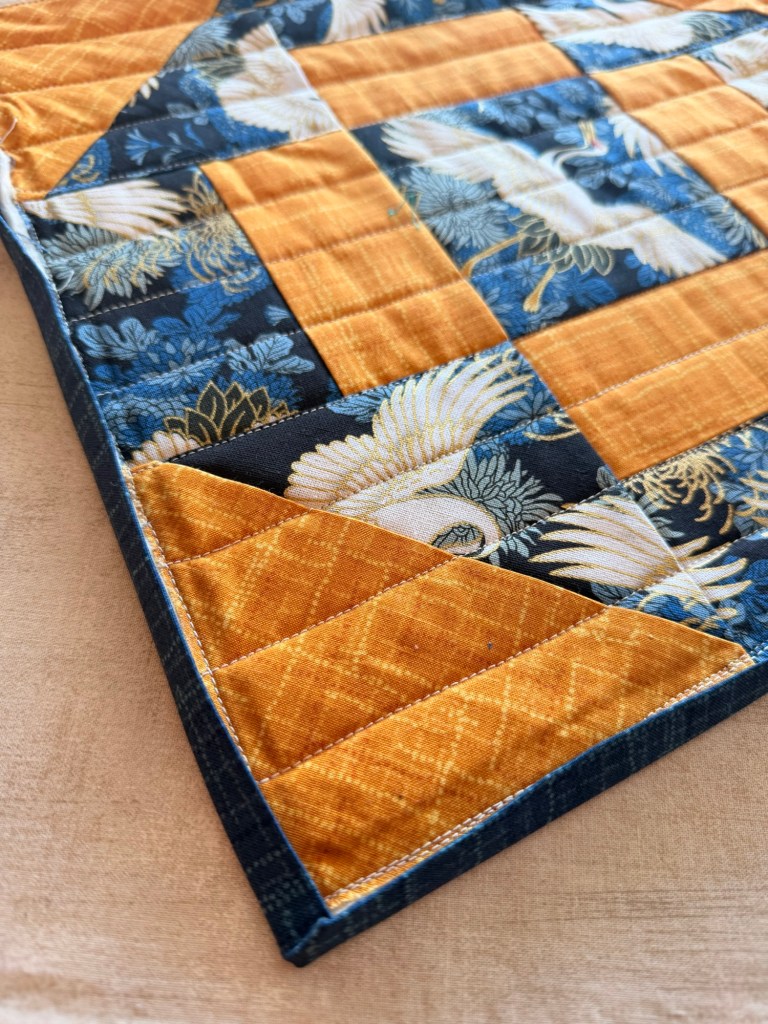
Throughout the class, we learned the importance of precise measuring, sewing accurate ¼-inch seams using a quilting foot, and carefully pressing fabric—a skill that reinforced concepts I had previously learned during my Sewing for Handweavers class. We also explored how rotating, flipping, and rearranging fabric pieces creates mirrored designs and complex quilt patterns. I immediately recognized how naturally these concepts connect to my art curriculum. Students already encounter rotation, reflection, symmetry, tessellations, and geometric transformations in mathematics, as well as through activities such as origami. My mind was already envisioning classroom lessons that would combine these mathematical concepts with artistic design. We also learned about batting, backing fabric, and the process of assembling and quilting all of the layers into a finished textile.
Creating my own quilt reminded me just how mindful every step of the process must be. Quilting cannot be rushed; it requires complete focus and careful attention to detail. A single inaccurate measurement can affect the entire project. I personally had to restart one section three separate times after allowing my mind to wander. Experiencing that frustration reminded me exactly what my students feel when they make mistakes in the art room. It was a valuable opportunity to once again experience learning through the eyes of a beginner.
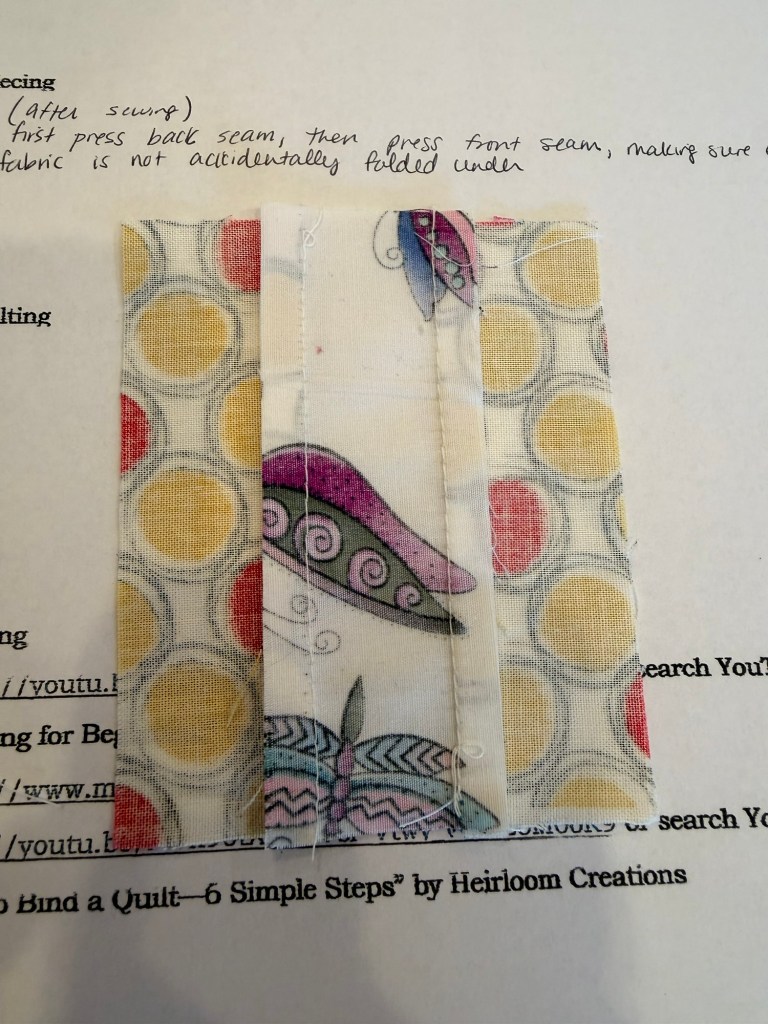
One of the most meaningful parts of the day was listening to the conversations happening around the room. Two women had come together—a mother and her adult daughter. The mother shared stories about her own mother making quilts for their family, while the daughter explained that she had chosen floral fabrics because they reminded her of her mother’s garden. Everyone chose their own fabric, for their own personal reasons or preferences. As everyone worked, similar stories naturally emerged. The woman sitting beside me shared that she began quilting after her son left home because she suddenly felt she no longer had someone to care for. Today, she channels that care into making lap quilts for elderly people in her community. I realized that quilting is far more than sewing fabric together. It is about preserving memories, expressing love, building community, and telling personal stories. Textiles are deeply connected to humanity.
After visiting the Philadelphia Museum of Art and experiencing quilting traditions from many different cultures, I knew I wanted to bring a community quilting project to my school. My vision is to create a collaborative quilt that celebrates our students, their families, and the many cultures that make up our school community. Rather than simply recreating traditional Lancaster quilts, students will use quilting as a way to tell their own stories and represent what is important to them. This class provided me with the technical skills and confidence needed to bring quilt-making back to my classroom and create meaningful opportunities for students to connect history, mathematics, art, identity, and community through textiles.
Self Study- School of Sweet Georgia- August 2026